
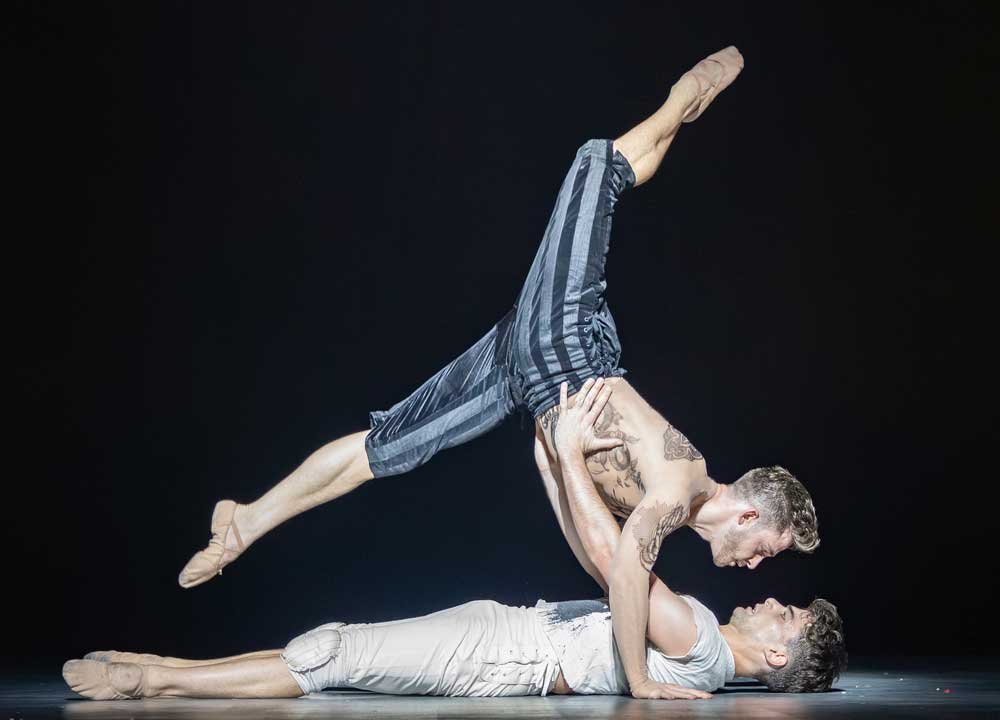
Following rave reviews from critics and audiences, standing ovations and winning Best Edinburgh International Festival show at The List Awards in 2025, Scottish Ballet brings Mary, Queen of Scots to Sadler’s Wells in March, followed by US dates.
Despite an ‘O’ Level (remember those) in History, I have always been rather bemused bothered and bewildered about the relationship between the English and Scottish Tudor and Elizabethan families, who was who, which was Catholic and who a follower of John Knox, and which usurper was trying to murder which pretender or monarch.
And if you think that this period of history is confusing enough, you might assume that trying to represent these complex relationships, the spying and the backstabbing, in balletic terms, is a task too far. But not so.
Choreographer and co-creator Sophie Laplanc and her collaborator and director James Bonas have produced a work of some brilliance, with clear narrative lines. the headline history plainly laid out, and really getting under the skin and into the minds of the main players, Elizabeth 1 and the titular Mary, cousins who never met in real life. This the story of Mary’s downfall, married off in virtual childhood to the French Dauphin, her return to Scotland on his early death and the complex plots to prevent her from claiming the English throne. The loss of her Scottish crown and execution after her pleas to the Queen of England go unheeded, as she leaves behind her son James 1 (who was to become King), is told in an unconventional manner. It is told through the eyes and retrospection of Elizabeth as she is dying, her angst and, we can surmise, regret, reflected in tragedy and pathos .
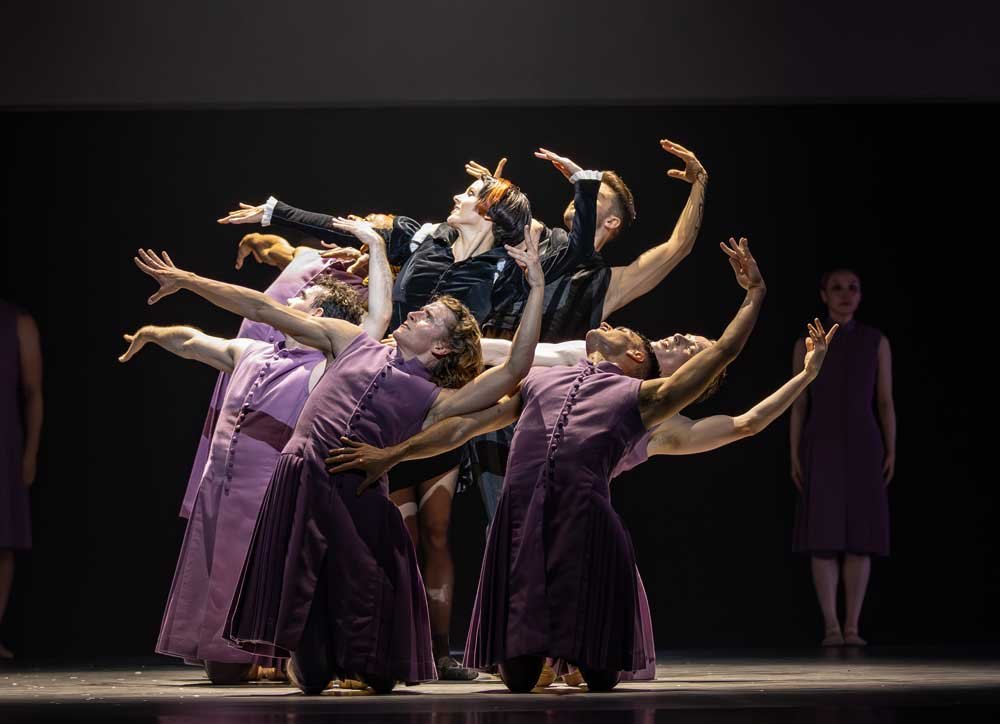
This full-length ballet is danced to a powerful score (played live by a full orchestra under the baton of Martin Yates) by Mikael Karlson and Michael P Atkinson, sometimes rhythmically minimalist, sometimes lyrical or mournful, and sometime to highland flings and jigs, is a masterclass in modern narrative ballet. It is danced with some superb edgy, angular, and shapeshifting elegance with some terrific effortless lifts and pointe work. The mix of the modern contemporary and the classical is always engaging and mesmerising. As a musical theatre devotee, I could not but notice a shade of Sondheim’s ‘Follies’ with the young and old Elizabeth frequently shadowing one another and even, in a divine pas de deux danced by ‘proxies’ (Anna Williams and Grace Horler) in a portrayal of their kinship yet disconnection.
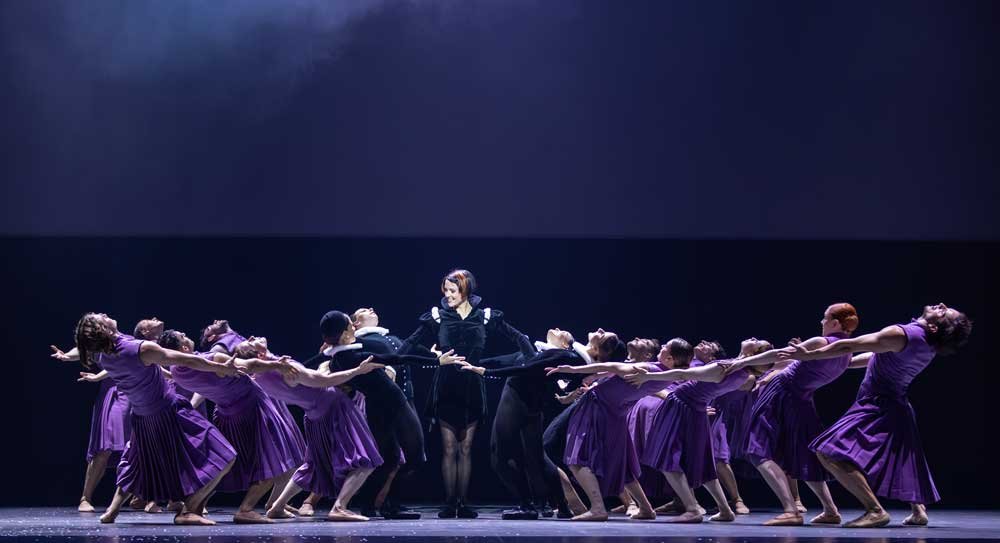
Mary is danced by Roseanna Leney in a gripping rendition, bobbed hair and elegantly dressed in simple black, flighty, fun loving and ultimately tragic figure. Charlotta Ofverholm who plays the older, confused, befuddled and disorientated Elizabeth is equally tragic. In a duet with Mary, who celebrates her pregnancy with a ballon, with the name James inscribed on it, she dances with her own, unmarked balloon, in a pathetic attempt to emulate Mary; and of course, she never did have children. Harvey Littlefield, a tall male dancer, characterises the younger Elizabeth, in one scene, on stilts, but always towering above both Mary, her older self and the entire court.
But this show is not just about powerful women. There are some dazzling moves by Evan London as Mary’s seducer, Darnley and Bruno Micchiardi as Italian courtier and the private secretary of Mary whose amorous adventure with Darnley toxifies their marriage.
Thomas Edwards depicts Walsingham, Elizabth’s spy at court who discovers coded letters between the Catholic Babington and Mary, offering to kill Elizabeth and keeping the Queen informed of the progress of plot as a sinister, Rothbart like viper.
And if the exposition of Mary’s character may remind you of ‘Cabaret’s Sally Bowles then the Jester, balletically graceful in lime green (Kayla-Maree Tarantolo) is the Emcee, a menacing and disquieting figure representing death and acting as a manipulative ring master urging this story to its awful, tragic conclusion.
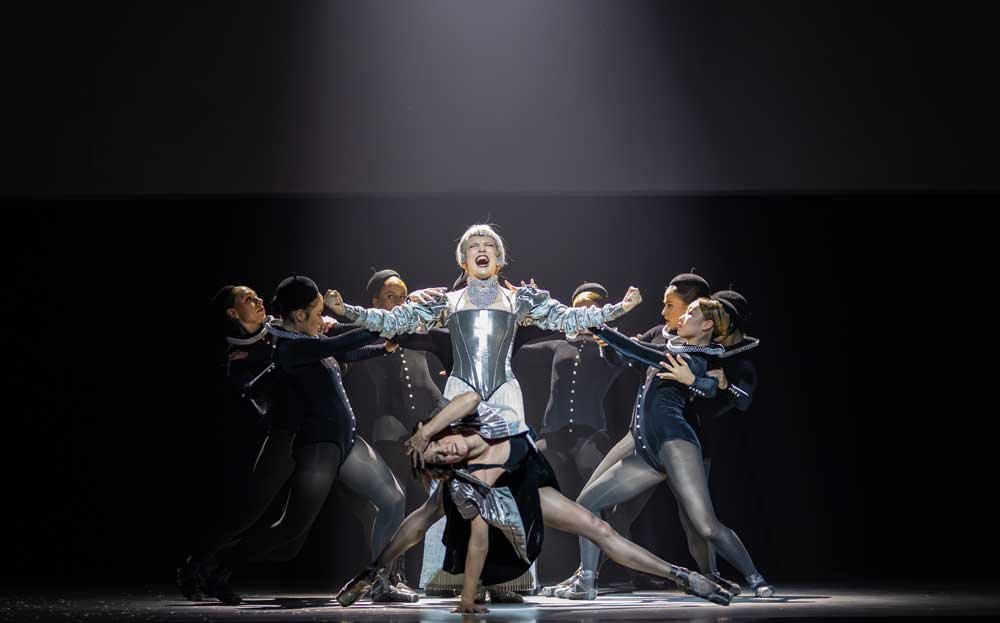
The settings (by Soutra Gilmour) against which the story is told are abstract, contemporary and never less than impressive with its moving walls, double side wardrobes through which the dancers can enter and exit, all of which is lit strikingly by Bonnie Beecher. Monochromatic costuming, also by Gilmour mixes Viviene Westwood punk, a contemporary take on Tudor ruffs and an ensemble of spies who are pictured as insects.
The underhand activity at the monarchic courts is rendered in terms of spiders and roaches, and in a particularly effective scene by Beecher’s disturbingly created shadows.
Scottish Ballet should be particularly proud of this creation which is a dynamic, dramatic, punchy, and visually stunning piece of work. If any narrative ballet can sock it to an audience, it is this one, and then some!
Photo credit: Andy Ross
Creative Team
- Choreographer & Co-Creator: Sophie Laplane
- Director & Co-Creator: James Bonas
- Original Score: Mikael Karlsson & Michael P. Atkinson
- Set & Costume Designer: Soutra Gilmour
- Lighting Designer: Bonnie Beecher
Mary, Queen of Scots
- Roseanna Leney
- Marlen Fuerte Castro
- Kayla-Maree Tarantolo
Elizabeth I (Older)
- Charlotta Öfverholm
- Madeline Squire
Elizabeth I (Younger)
- Harvey Littlefield
- Gina Scott
Lord Darnley
- Evan Loudon
- Yuri Marques
David Rizzio
- Andrea Azzari
- Thomas Edwards
- Javier Andreu
Francis Walsingham
- James Garrington
- Thomas Edwards
- Mackenzie Jacob
Jester
- Kayla-Maree Tarantolo
- Andrea Azzari
- Danila Marzilli
Catherine de’ Medici / James VI & I
- Madeline Squire
- Alice Kawalek
- Rishan Benjamin
Dauphin
- Mackenzie Jacob
- James Garrington
- Hamish Longley