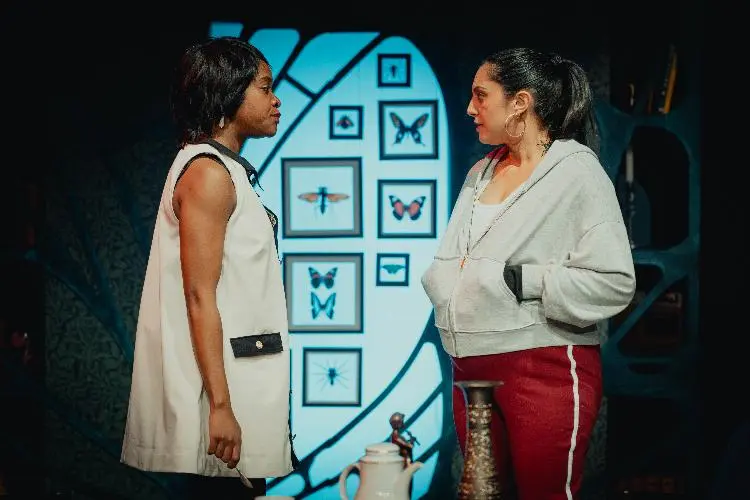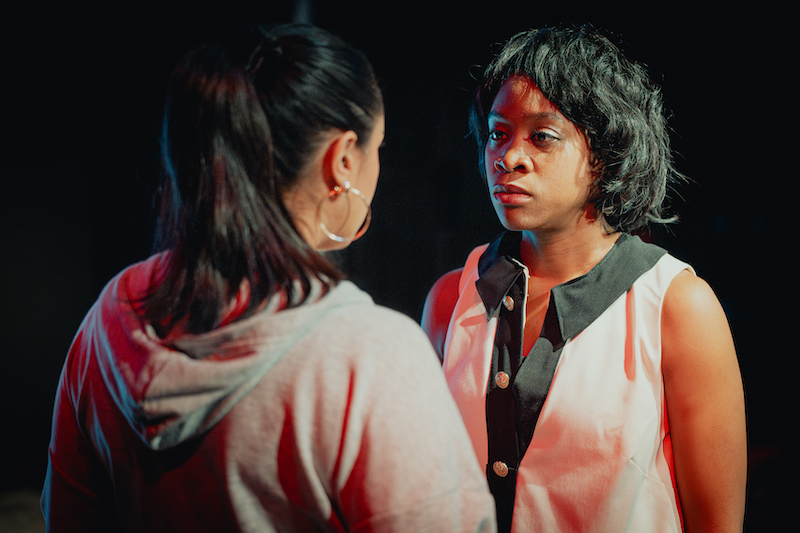
CultureClash Theatre comments: we’re really looking forward to being reunited with Greenwich Theatre for this co-production of The Wasp, and to be part of the inaugural programme presented by Greenwich Theatre Productions. The Wasp is small in scale and huge in impact – the perfect piece to take to Southwark Playhouse.
Artistic Director of Greenwich Theatre, James Haddrell comments, Part of the rationale behind the launch of Greenwich Theatre Productions was matching plays to venues, and Morgan Lloyd Malcolm’s play deserves a space which brings the audience right up close and personal with the twisting, unpredictable thriller. The Little at Southwark Playhouse is perfect. I’ve watched Southwark Playhouse grow in reputation and ambition rapidly in recent years, and we are delighted with this new partnership which sits alongside other new links with Kings Head Theatre and the Park Theatre.
CEO and Artistic Director of Southwark Playhouse Chris Smyrnios comments, We’re very much looking forward to hosting this revival of Morgan Lloyd Malcolm’s gripping play The Wasp at Southwark Playhouse Borough, and to be working with Greenwich Theatre Productions, as part of their exciting Spring season.
Review by Claire-Monique Martin
There is something deeply unsettling about watching two people quietly destroy each other over tea and conversation. The Wasp thrives in that discomfort — a slow-burning psychological thriller that reveals its sting gradually, tightening its grip until the final moments leave the audience sitting in stunned silence.
This production at Southwark Playhouse is anchored by two incredibly watchable performances from Cassandra Hercules and Serin Ibrahim, who carry the emotional and moral complexity of the play with precision. Their chemistry feels volatile from the outset; every exchange carries an undercurrent of danger, even in stillness.
One of the strongest elements of the production is its set design. Performed in a three-sided configuration, the staging cleverly embraces the intimacy of the space rather than fighting against it. Four structural columns dominate the stage, mirrored by four overhead lights above, creating an almost clinical symmetry that reflects the play’s psychological tension. Particularly effective is the concealed living room hidden behind a black curtain, only revealed as the narrative progresses deeper into darker territory. It is a smart visual metaphor for the secrets both women are carrying.
However, while the production successfully builds atmosphere, the opening section struggles vocally. From a side-middle seating position, sections of dialogue were difficult to hear, partly due to projection and partly because the sound design occasionally overpowered the actors. The music at points sat too heavily above the text, muddying some of the early exchanges when clarity is essential to establishing rhythm and tension.
The blocking also did not always fully utilise the demands of three-sided staging. Certain moments felt closed off to portions of the audience, limiting visibility and connection during key interactions. That being said, where I was sitting, at the end, there was some payoff to the blocking.
When the production locks into itself, it becomes gripping theatre. The script is razor sharp, constantly shifting audience sympathies and forcing us to question who holds power, who deserves revenge, and whether justice ever arrives cleanly.
My biggest criticism lies in the decision to split the play into two acts. Structurally, The Wasp feels far better suited to a continuous 90-minute run. The interval diffuses some of the mounting pressure that the first half works so hard to establish. As a single, uninterrupted experience, the play’s emotional suffocation and escalating dread would likely land with even greater force.
Still, the production succeeds where it matters most: it lingers. By the final scene, there is no catharsis, only an overwhelming sense of hopeless inevitability. You leave questioning motives, morality, and the brutal reality that karma often arrives years later — and rarely without collateral damage.
It is uncomfortable, tense, and deeply human theatre. And like the insect it is named after, the sting comes long after the encounter itself.