
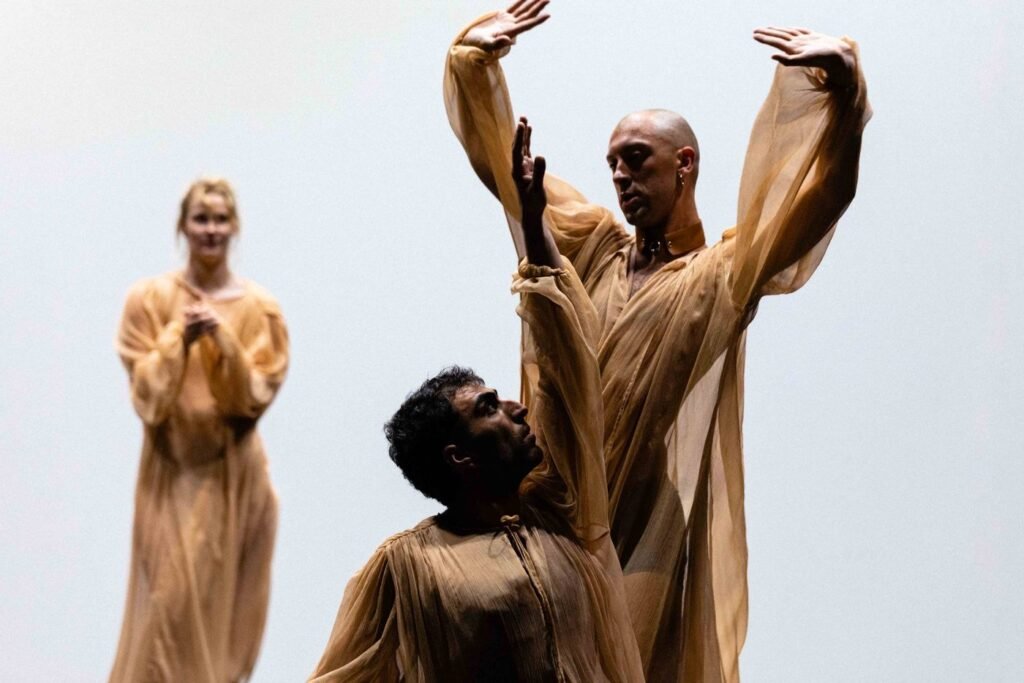
Over the past three decades, Gat has established an internationally acclaimed choreographic practice defined by musicality, freedom, and collaboration. At the start of 2026, he formed a new company of 12 international dancers based in Marseille, bringing together artists from Norway, the Netherlands, Italy, France, Israel, and Belgium who have developed this new work together.
FIVE DAYS IN THE SUN moves from darkness to light, despair to joy, and tension to release. Across five acts, 12 dancers navigate a layered choreographic voyage, tracing ideas of transformation, resilience, and catharsis. Distinctly human, the piece reflects Gat’s ongoing exploration of the performer’s presence, with dancers remaining acutely aware of themselves on stage and the emotional resonance generated through movement.
The performance is set to Gustav Mahler’s Symphony No. 5, which was composed 125 years ago. One of his most celebrated works, the symphony was written following a near-death experience and his whirlwind romance with Alma Schindler. This encounter with mortality and love shapes the emotional landscape of the score, which in turn underpins the journey of the performance.
Review by Stephen Gilchrist.
The renowned Hollywood and Broadway lyricist, Sammy Cahn, was once asked “what comes first, the music or the lyrics?” His reply “The Contract!” And so, it left me wondering in a case such as Gat’s ‘Five Days in the Sun” set to Mahler’s Symphony No.5, is the music expressing the dance, or is the dance expressing the music? Mahler’s glorious work is one of the most emotionally complex, celebrated, and monumental works in the classical orchestral repertoire. Does a seventy-minute contemporary ballet diminish the score composed 125 years earlier or enhance it? Does the score enhance the dance or diminish it?
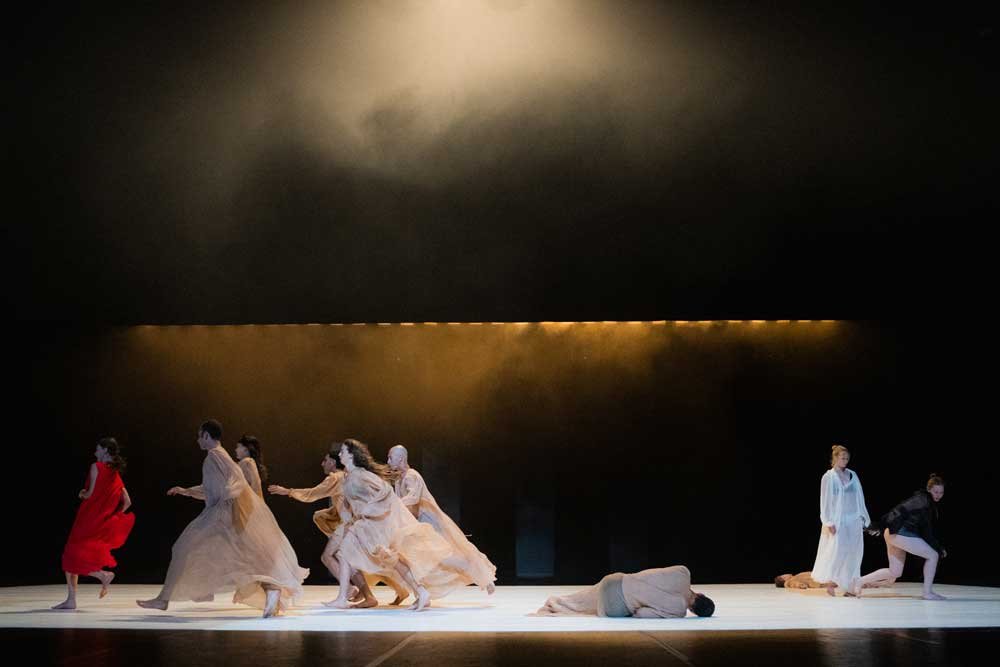
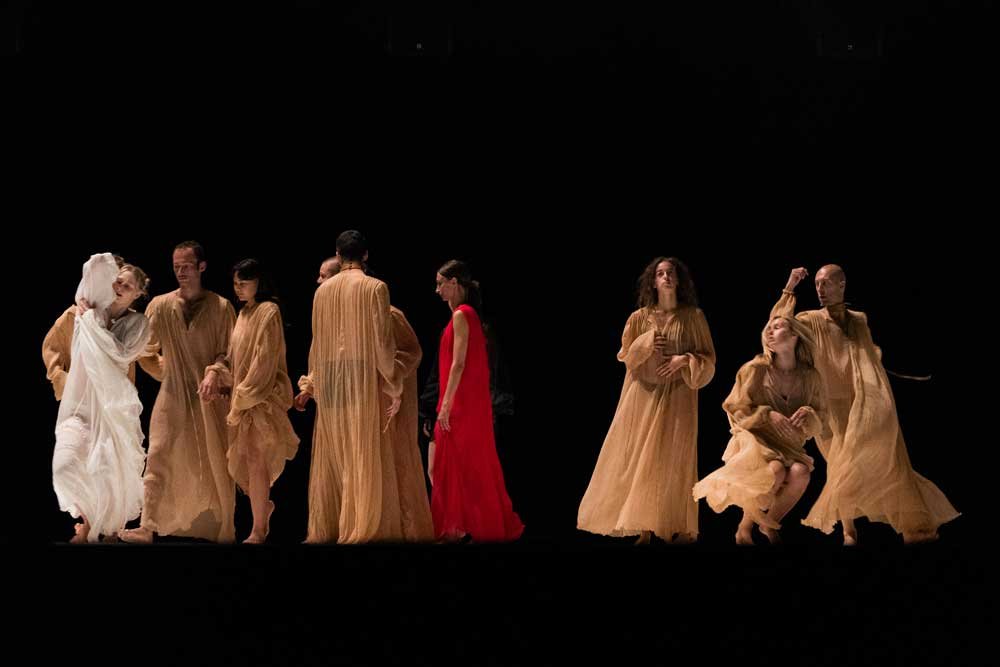
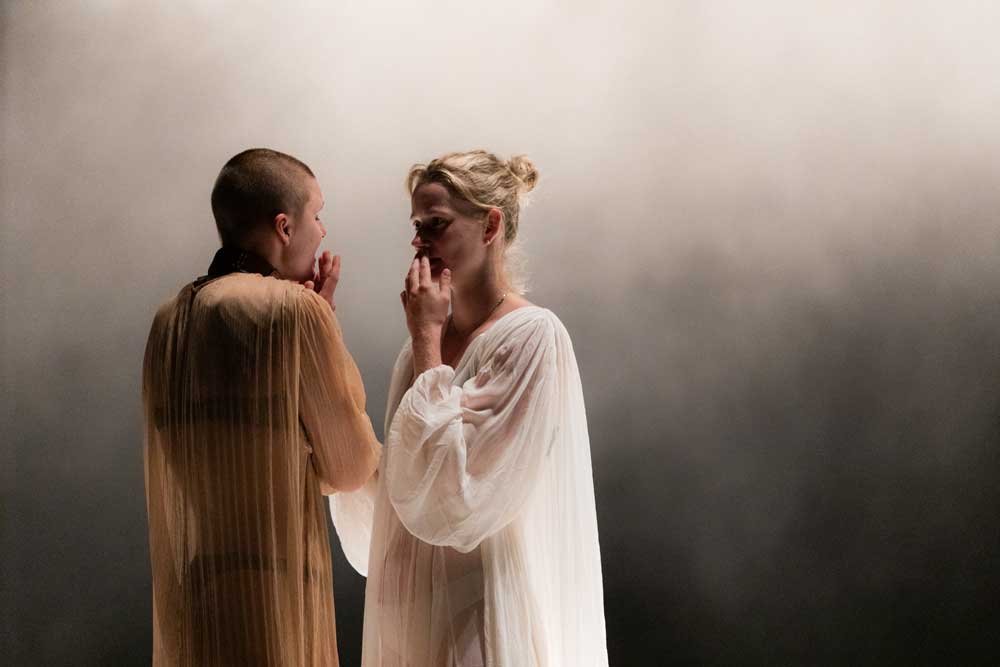
Five Days in the Sun is a new work which premiered at Montpellier Danse earlier in 2026. It is an abstract piece which seems to be looking for dramaturgy. The ‘Five Days’ are episodes representative of each of Mahler’s movements 1-4. The dancers appear to be characters who scurry and entangle between chaos, confrontation, in unison groups, from which individual ‘outsiders’ emerge’ inelegantly undulating, extending, with grand battements whilst often expressing despair. Is this the state of the world we live in and what are we to take from it?
Mahler was Jewish, and Gat is Israeli. Does their shared ethnicity add meaning or explain this work? I think not. In John Keat’s “Ode on a Grecian Urn,” the speaker hears the art object declare: “Beauty is truth, truth beauty, —that is all / Ye know on earth, and all ye need to know.” And so, my problem with this piece is not it finding truthful expression in Mahler, but it often lacks beauty.
I have used the word inelegant. Sometimes inelegance can have real power but, in this work, it is simply repetitious, however much the Technical Director, Guillaume Fevrier, Sound Designer, Frédéric Duru and Production, by Emanuel Gat Dance try not to make it so. Do not get me wrong the twelve strong company are superb as they move to a recording of movements 1-4 of the 1987 recording of the symphony by Wiener Philharmoniker under Leonard Bernstein and there often striking stage images.
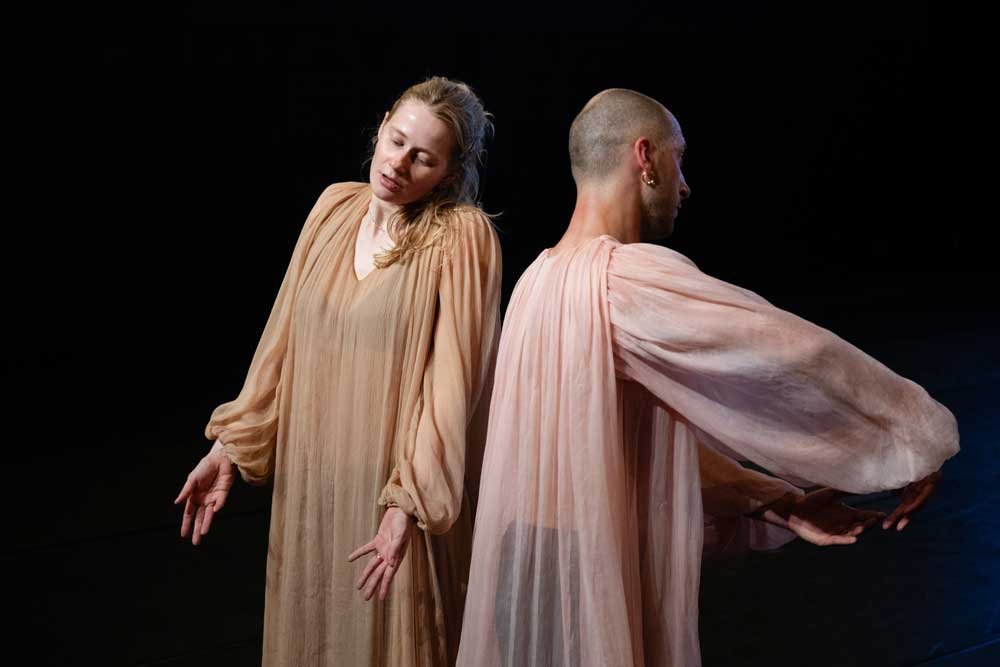
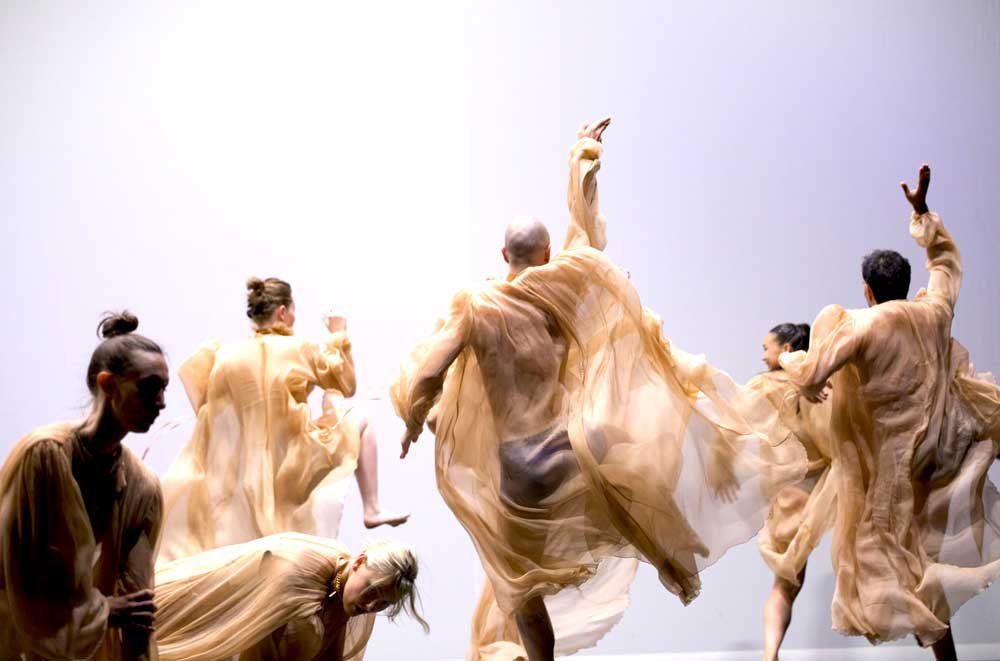
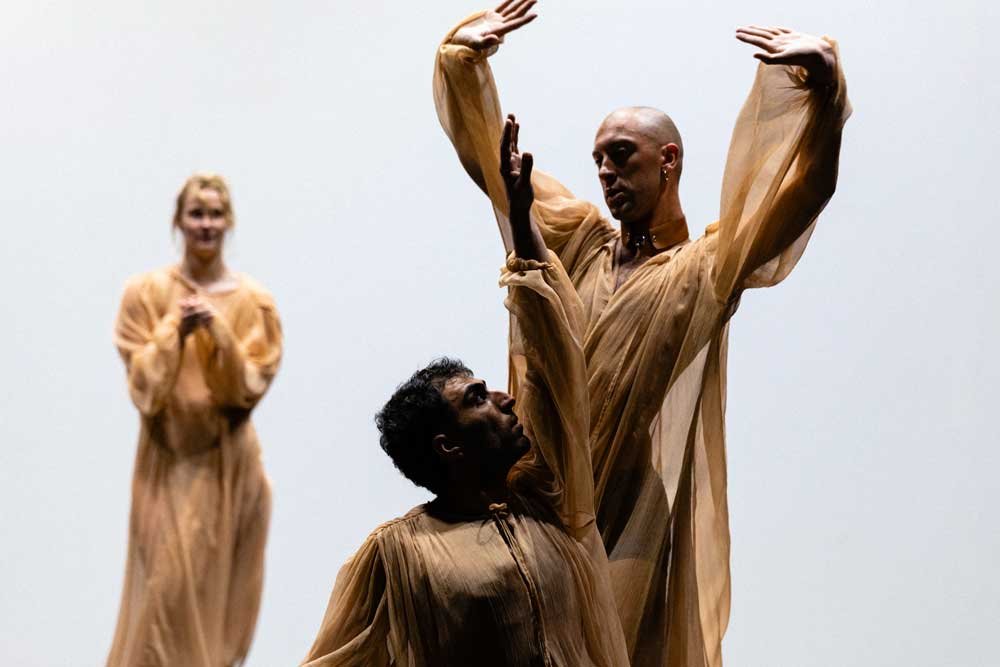
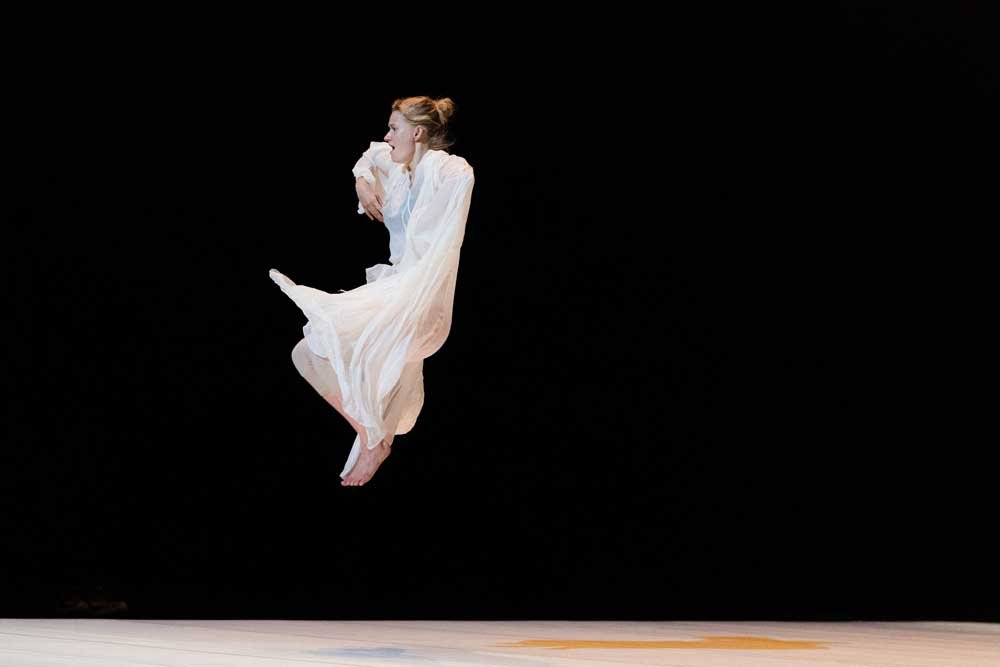
The ballet opens on a dense, shimmering amber fog. One by one, figures step forward from the obscurity, draped in sweeping fabrics that float like breath and morph into radiance (costumes by Vicher). As a solitary gesture replicates from person to person, an interconnected society crystallizes before your eyes. Are they asking, “who am I?” Is there going to be an element of storytelling here?
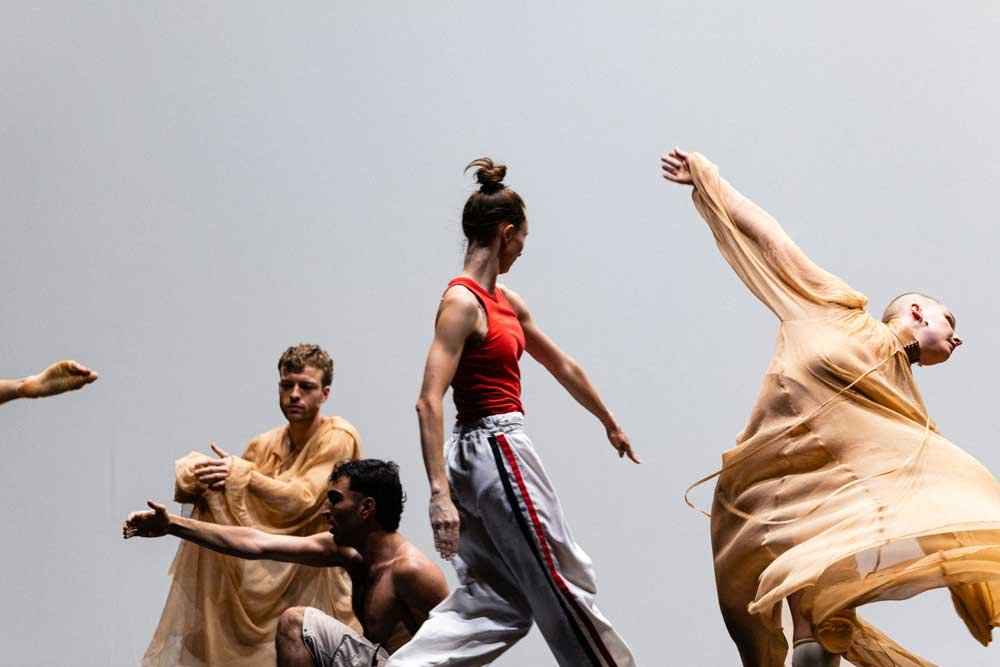
In episode two again the characters appear out of smoke, this time largely in dance practice clothing. Later, they appear in an apparent beach scene in swimming trunks and bikinis to an underscore of children playing and softer music. Who are these people? Are they merely expressing the music, structured into three distinct parts, mapping an emotional journey that travels from a severe opening funeral march (Trauermarsch) through storm and scherzo to an exuberant, life-affirming finale? I thought so at first, with the performers tracing sharp geometric lines across the stage, mimicking. mimic the complex, layered musical structures of Mahler’s score, but then I considered that the choreographer had lost his way somewhat.
The lighting was terrific as was the bare stage setting. the lighting as I understand it is personally designed by Emanuel Gat whose style uses beams of light as the primary scenic element. These beams shift and move fluidly, acting almost like additional dancers on an otherwise minimalist stage. I have asked a lot of questions in this review. I cannot answer them and so this was a thought-provoking evening, musically satisfying, often with some wonderful imagery, but halfway to a story which it never, and thus unsatisfyingly, completes.
Company: Emanuel Gat Dance
Venue: Sadler’s Wells Theatre
Date: 3–4 November 2026
Cast / Dancers
Emma Bogerd
Théo Brassart
Geremia Cappagli
Léa Delaporte
Zohar Kotz
Itai Meir
Giulia Quacqueri
Johanne Skogstad
Katherina Solvang
Noah Tyrell
Anaïs Van Caekenberghe
Winter Wieringa
Creative Team
Emanuel Gat – Choreography, scenography and lighting
Gustav Mahler – Music (Symphony No. 5 in C-sharp minor, movements 1–4)
Leonard Bernstein – Conductor, Wiener Philharmoniker (1987 recording)
Emanuel Gat – Additional sound creation
VICHER (Inez Wicher) – Costumes
Guillaume Fevrier – Technical Director
Frédéric Duru – Sound Designer
Marie-Pierre Guiol – Company Management
Mélanie Bichot – Production Coordinator
Emanuel Gat Dance – Production
Tickets: Click here