See Handel’s epic of power, passion and politics in an electrifying chamber staging.
Handel’s Giulio Cesare in Egitto comes to Grimeborn in a newly conceived intimate staging by New Trinity Baroque, conducted from the harpsichord by Predrag Gosta. Set amid political intrigue, seduction and revenge, this baroque masterpiece follows the fateful encounter between Julius Caesar and Cleopatra in a drama of ambition, grief and desire.
Performed by an international cast and a chamber orchestra on period instruments, the production brings Handel’s extraordinary score to life with immediacy, elegance and dramatic intensity. Praised internationally for its vibrant performances and commitment to historically informed practice, New Trinity Baroque presents one of opera’s greatest works in the close-up, theatrically charged atmosphere of the Grimeborn Opera Festival.
Review by Stephen Gilchrist
The Arcola Theatre in Dalston, an area of East London, in the London Borough of Hackney is not the Royal Opera House, nor the London Coliseum -home of the English National Opera-nor any of the great opera houses around the world, yet on my third visit to this year’s Grimeborn Opera Festival I was confirmed in my view that this summer season of operas performed by different opera companies is an essential part of London’s music scene.
Last night it was the New Trinity Baroque company performing Handel’s ‘Giulio Cesare in Egitto’ with Libretto by Nicola Francesco Haym. Not only were the performances by the international cast radiant but the singers were supported by an eleven-piece orchestra on period instruments producing the genuine baroque sound at a pitch of 415 hertz (Hz) meaning that the musical note A above middle C vibrates 415 times per second, which serves as the standard modern tuning for Baroque and early music.
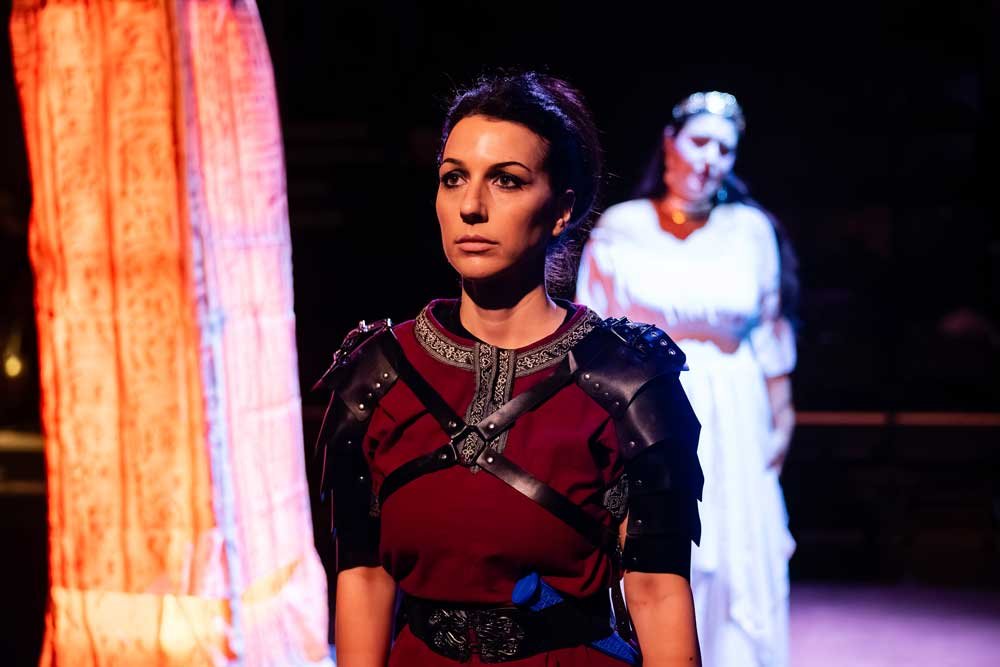
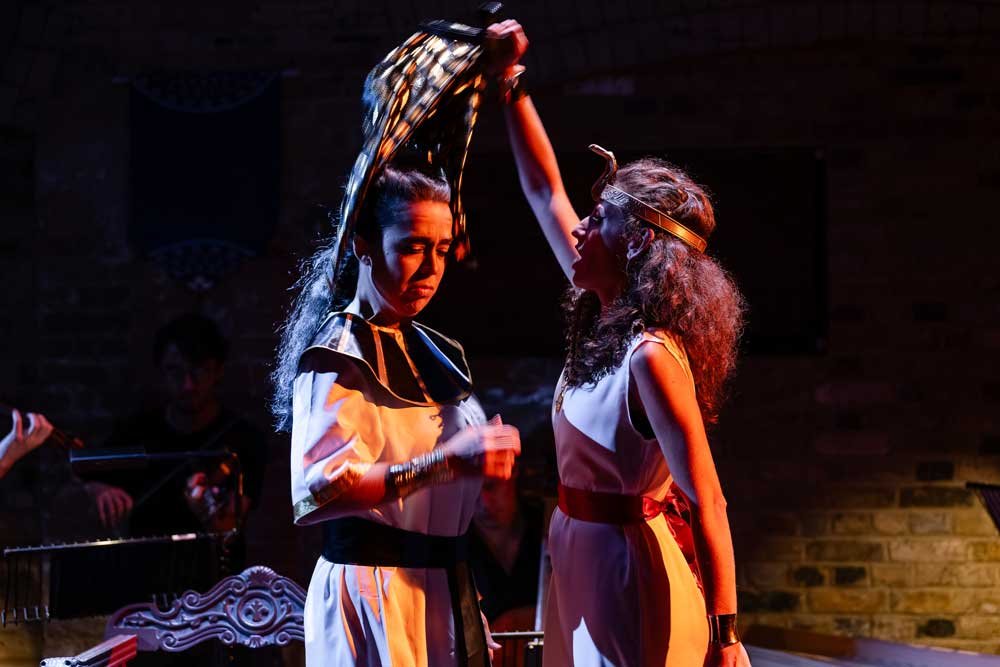
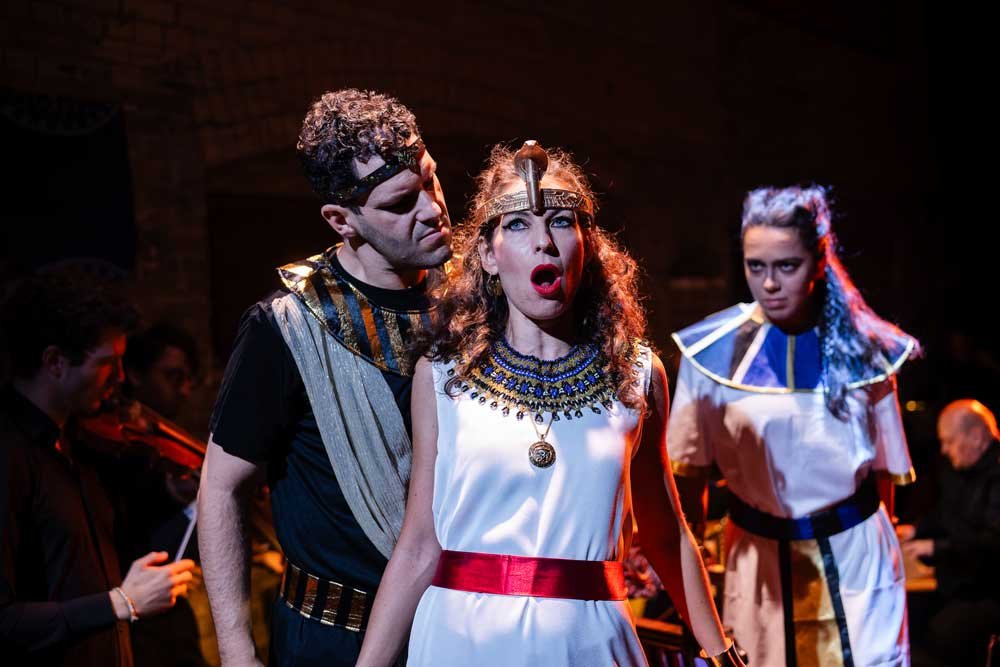
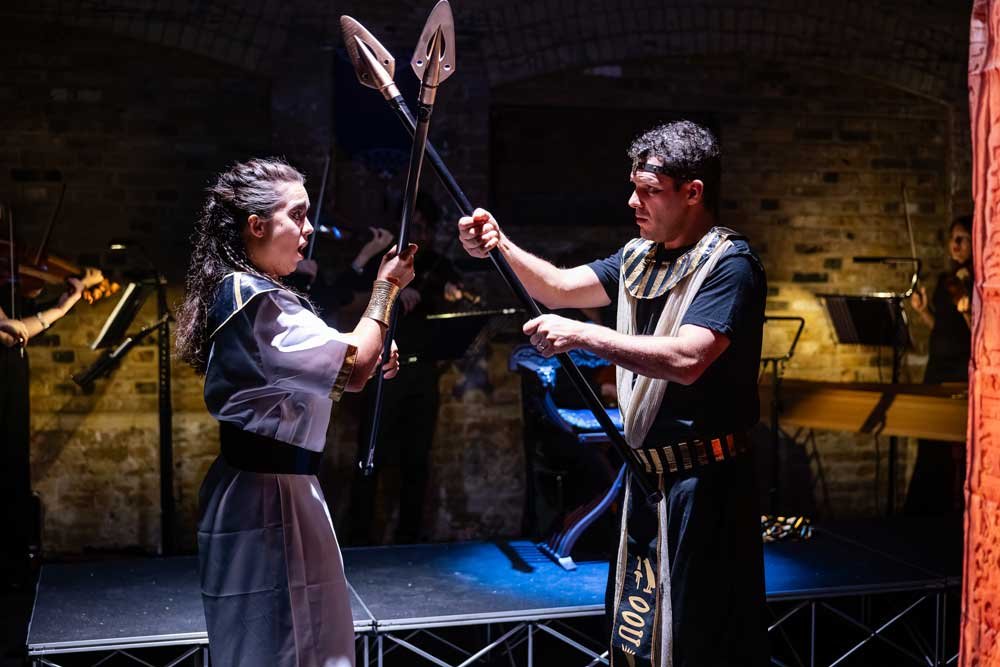
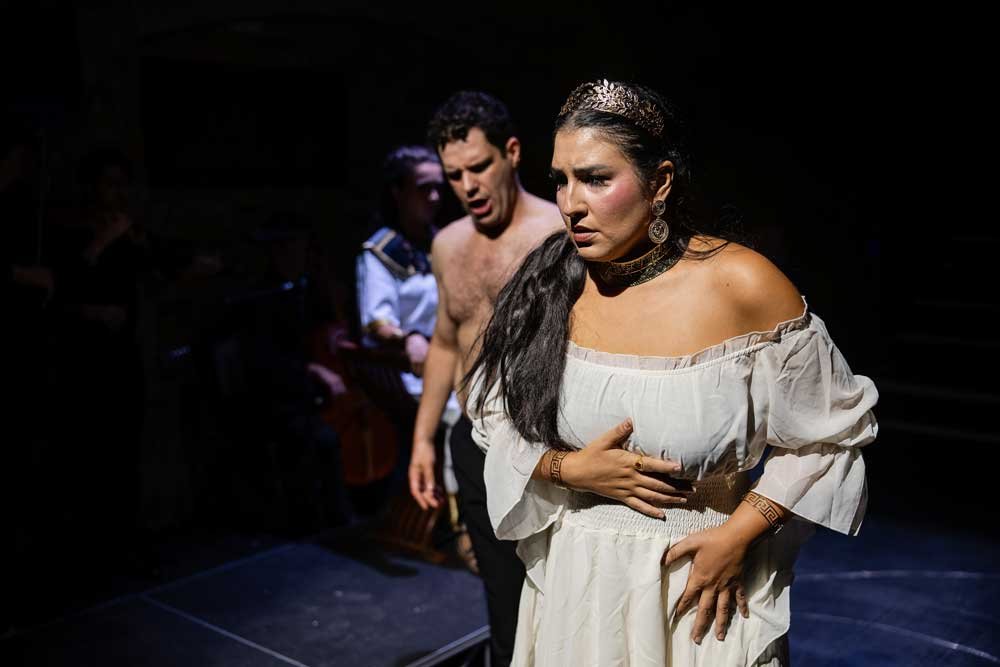
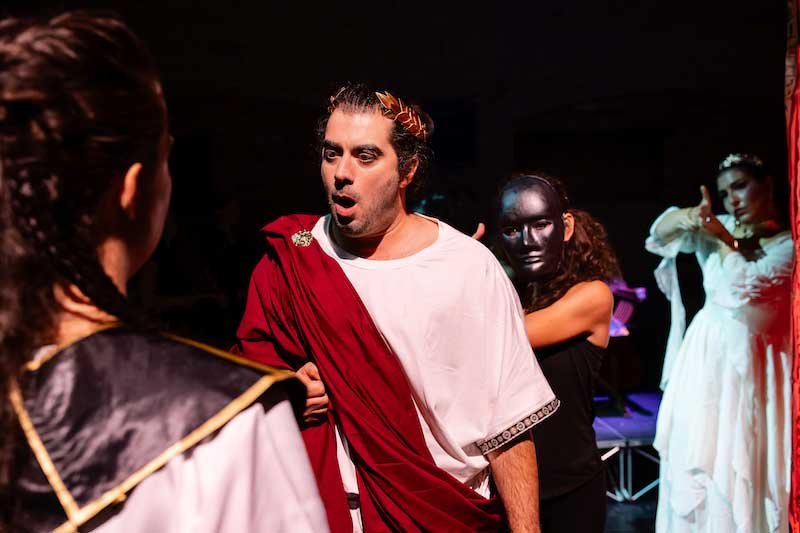
The staging by Marcio da Silva, in Italian with English surtitles, produced some strong stage images with some raw and vivid sexuality. Characters dressed and were undressed on occasions too frequent to recall. Artistic Director Predrag Gosta conducted from the harpsichord.
For those whose knowledge of Roman history begins and ends with ‘All of Gaul is divided into three parts’, namely what was learnt in their Latin class (if indeed they took Latin), the narrative concerns Caesar’s defeat of his rival Pompey, his arrival in Egypt which is ruled by Cleopatra and her brother Tolomeo (or Ptolemy). To Caesar’s disgust Pompey is beheaded at the instigation of Tolomeo’s general Achilla. Pompey’s widow Cornelia and son Sesto seek justice and vengeance, Cornelia is lusted after and raped by the bad guys, and Caesar and Cleopatra fall for each other.
Handel had an unmatched gift for writing singable, highly direct melodies that connect instantly with listeners. and whose arias and orchestral pieces capture the full spectrum of human feelings, from deep sorrow to explosive joy and fury. They were given full throttle in this production. As Caesar, the Flemish-Italian Sandro Rossi’s counter tenor was outstanding.
Similarly thrilling was Serbia’s soprano Radoslava Vorgić, as Cleopatra especially so in her opening aria “Non disperar; chi sa?”. This light, flirtatious, and agile coloratura aria to her tyrannical brother, Tolomeo (Ptolemy) was performed exquisitely. After he insults her intelligence and tells her to stick to “needle and thread” instead of the throne, she mockingly tells him not to despair—suggesting that while he is busy pursuing his endless amorous affairs, she will successfully woo Julius Caesar and claim the crown of Egypt for herself. Vorgić is the recipient of numerous awards, including the Ibla Grand Prize and a special award for performing Handel.
Federica Moi, contralto from Italy was Cornelia and rarely have a heard a purer or more mellifluous voice in that register. Her famous duet. “Son nata a lagrimar” (“I was born to weep”) with her son Sesto was deeply and sweetly moving. Tolomeo was sung powerfully by Julia Portela Piñón, mezzo-soprano from Spain. She studied at Guildhall School of Music and Drama and subsequently at the Royal Academy of Music and has appeared internationally. Cornelia’s son Sesto, seeking revenge for his murdered father was performed vigorously by Croatian soprano Silvija Radjen Kumar and the bad and lustful dude Achille, an epitome of cruelty, by the bass-baritone Marcio da Silva.
It wasn’t just the singing that impressed me, it was the characterisations and power each artiste brought to their roles. Their acting performances were of the highest order. This was a boutique production of a baroque piece that was at once, exciting, exhilarating and gripping. An evening of pure theatrical musical pleasure.
Cast
- Sandro Rossi — Giulio Cesare (Julius Caesar)
- Radoslava Vorgić — Cleopatra
- Julia Portela Piñón — Tolomeo (Ptolemy)
- Federica Moi — Cornelia
- Silvija Radjen Kumar — Sesto (Sesto Pompeo)
- Marcio da Silva — Achilla
Creatives
- George Frideric Handel — Music
- Nicola Francesco Haym — Libretto
- Marcio da Silva — Stage Director & Lighting Designer
- Predrag Gosta — Conductor, Artistic Director & Producer; harpsichord
- New Trinity Baroque — Orchestra
- New Trinity Baroque — Producer
- Photo credit – Julian Guidera