
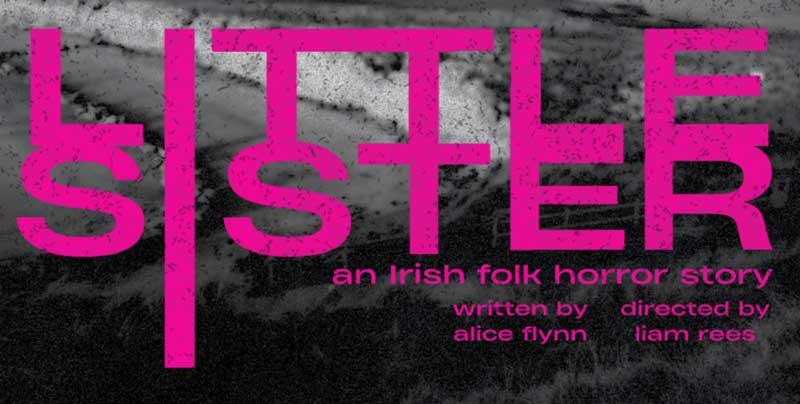
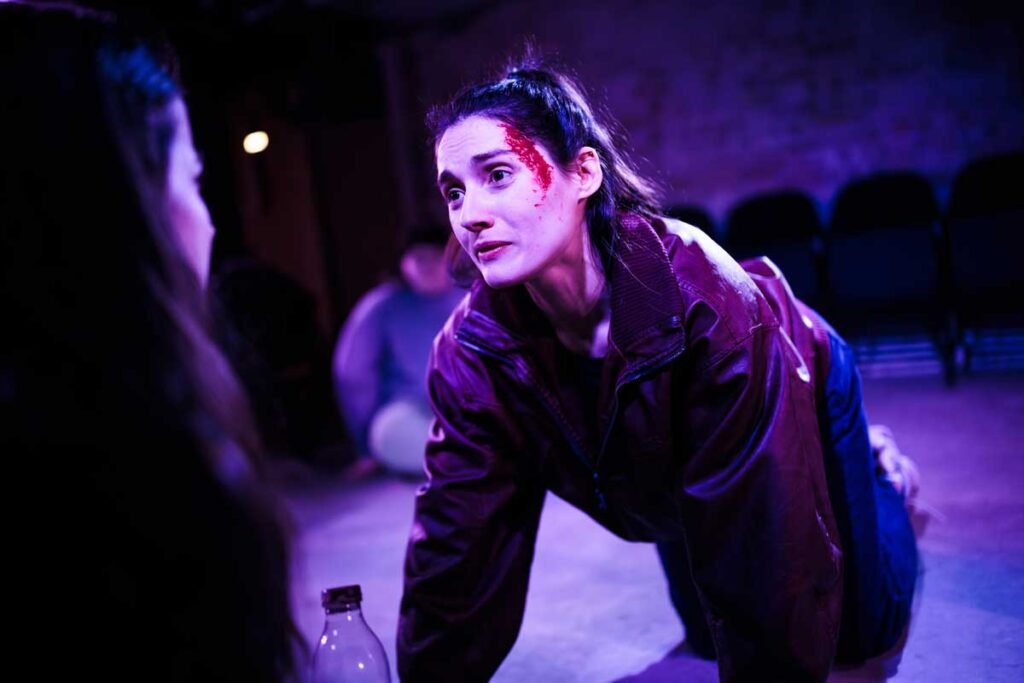
Two decades after the infamous disappearance of troubled teen Shona, a bloodied and disoriented woman appears on the doorstep of the Mundy family home on the anniversary of their mother’s death demanding to be let in. As sisters Bridget and Sally struggle to pick up the pieces of a childhood defined by public enquiries, speculation and an empty chair at the dinner table, the woman on their doorstep could hold the answer to what really happened to their sister all of those years ago.
Review by Stephen Gilchrist
One of the joys of being a reviewer of the performing arts is the discovery of venues, work and talent in small corners of the theatre world in London and to enjoy experiences which might otherwise have passed me by, or by which, of choice, I would not have chosen to participate.
And so to The Glitch. a welcoming café/bar/performing platform behind Waterloo station which if nothing, feels like an artsy bohemian watering hole out of Montparnasse on the Parisian left bank. When I visited it was hosting a play written by the talented Alice Flynn, a neurodivergent practitioner of multiple disciplines in theatre creation.
Her self-described ‘Irish folk horror story’ is an eighty-minute piece for four female actors and is a study in grief, illusion, delusion and family relationships. It is a dark and twisting play. Even at the finality of the drama, nothing is, or may be, what it seems. If nothing else it reminded me of J. B. Priestley’s ‘An Inspector Calls,’ where family retrospective reflection, introspection and self-realisation is triggered by the arrival of a third party, the mysterious ‘Inspector.’ Except in this case the life of two sisters living in Sligo, Sally and Bridget, is upended by the arrival of a woman, bleeding and distressed, claiming to be their older sister, Shona, who famously disappeared twenty-one years earlier. ‘The Woman’ as she is described in the credits does not realise, she has been away for two decades. Their mother, Joan, is dead. She was psychotic and true crime conspiracy theorists have speculated she was the author of Shona’s murder. Sally is an aspiring writer who has had a book commissioned in which she proposes to retell the story and how the disappearance of her sister has affected her life. Reference is made to Celtic folk tales of doomed lovers
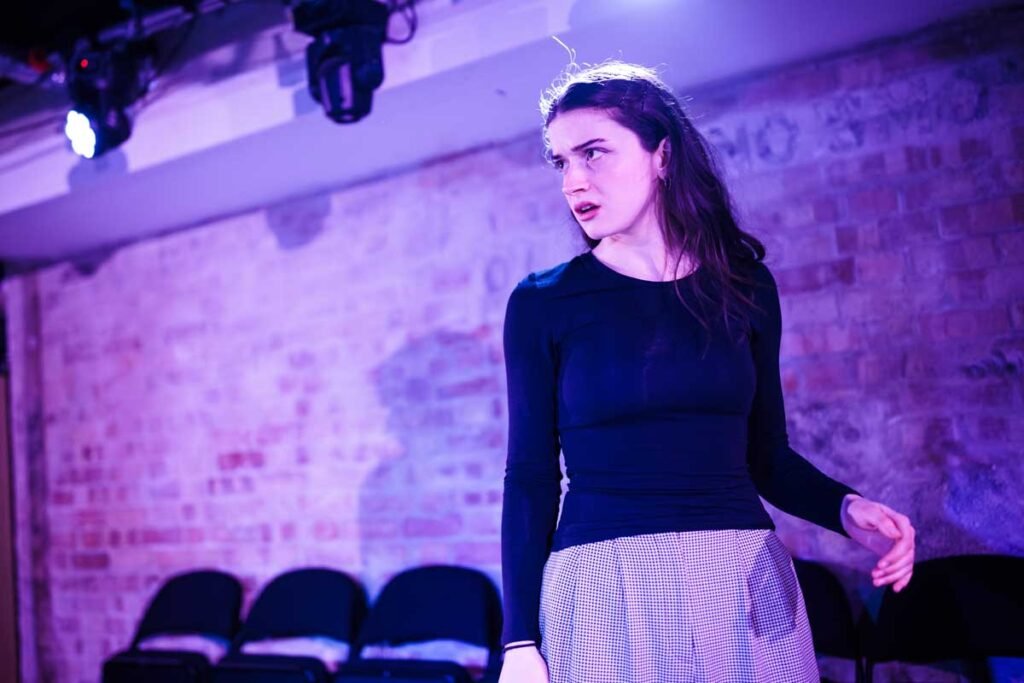
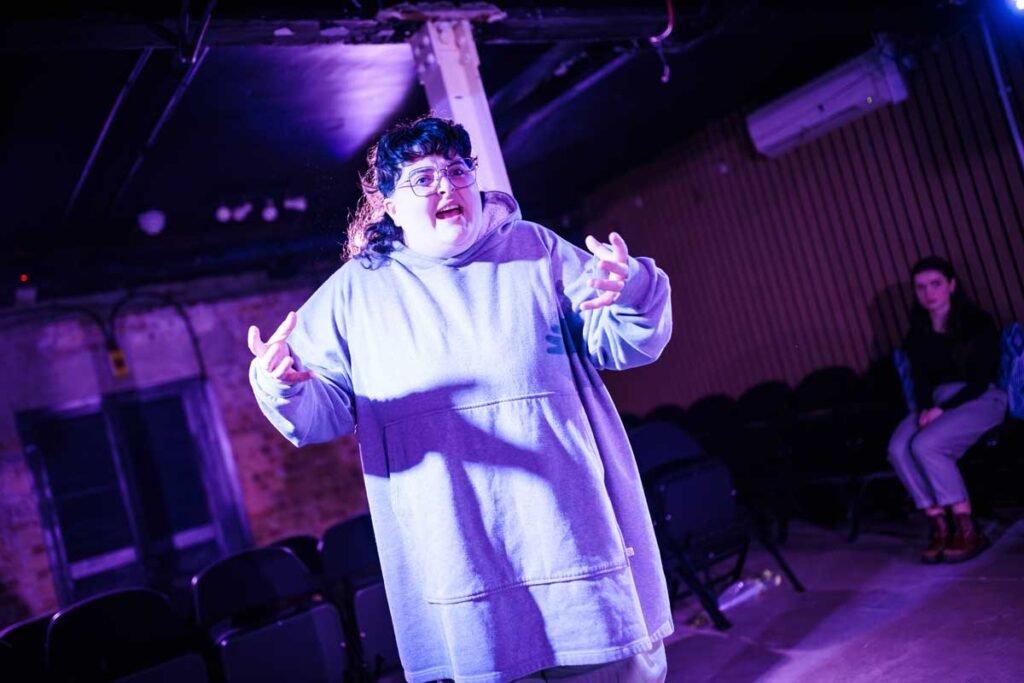
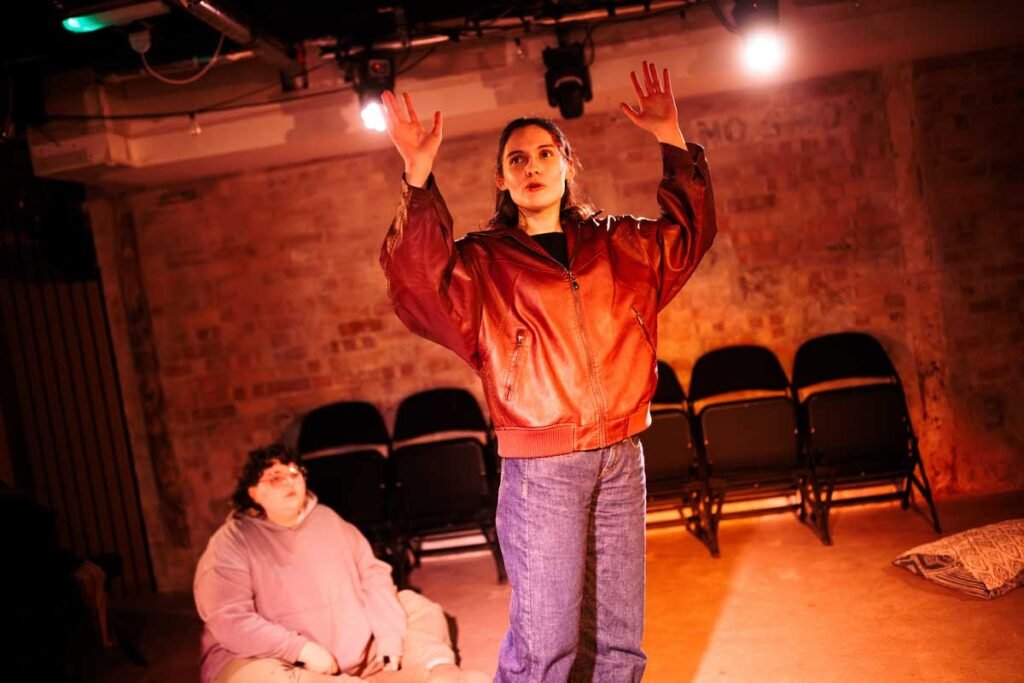
As the characters interact with each other, relationships unravel, and violence always threatens amid drink laden kind, and merciless, recollections of their childhood. The play is performed in the round, or should I say, in the square, the action taking place on a bare centre square performing space. The intimacy of an audience with the actors in a small space on a bare stage means there is no hiding place. Such closeness often cruelly exposes deficiencies in performance. Not so here though.
The performances are absolutely first class and tension maintained until the very end. Under Director, Liam Rees’s sure hand the pace is maintained, never letting up. Beca Barton as the gay, perhaps neurotic, sister, Bridget, Mimi Millmore as the self-centred, ambitious writer Sally and Anna Coupe as ‘The Woman’ all give fine performances. Georgina Musgrave as Bridget’s comforting and caring partner, Heather, completes the company
You may think from my account of the narrative of the piece that it is dark and doom laden. Not so. There is much humour, black for the most part. It might even be described as a comedy, though I would not choose that epithet
This play was a shortlisted nominee for the Women’s Prize for Playwriting in 2021 and is well worth a visit. On the night I went the audience loved it, as did I and my companion. It is well worth eighty minutes of anyone’s time and the venue itself has an excellent bar and warm atmosphere.
Writer, Alice Flynn.
Director, Liam Rees.
Producer, Iona Bremner.
Anna Coupe – Woman
Beca Barton – Bridget
Mimi Millmore – Sally
Georgina Musgrave – Heather
Ticket link: https://www.tickettailor.com/events/vaultcreativearts/1924414