
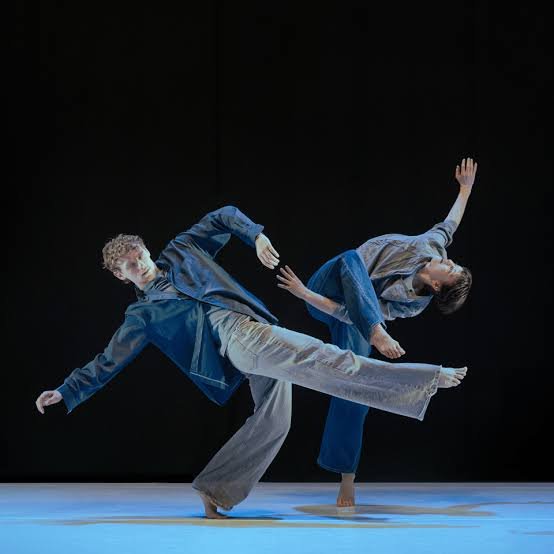
Contemporary dance company National Dance Company Wales brings a heartfelt double bill full of raw emotion and energy for their Sadler’s Wells East debut in September with Blue | Glas. Theo Clinkard’s beloved Ordinary Courage is restaged for a new generation, and Olivier Award-nominated Sadler’s Wells Associate Artist Alesandra Seutin makes a new work for the repertory company, titled Untamed.
NDCWales creates and presents ambitious, engaging dance work across the UK and internationally. Their artistic programme is driven by a commitment to create new work, discover and develop new artists and to inspire audiences and communities through high quality and enriching dance experiences.
Review by Richard Lambert.
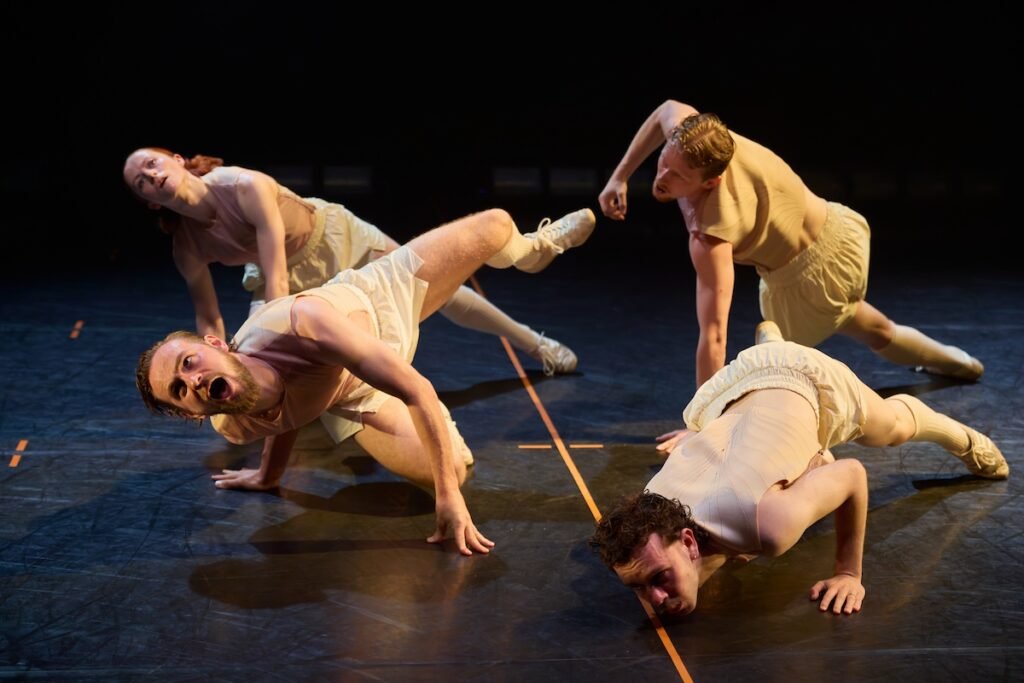
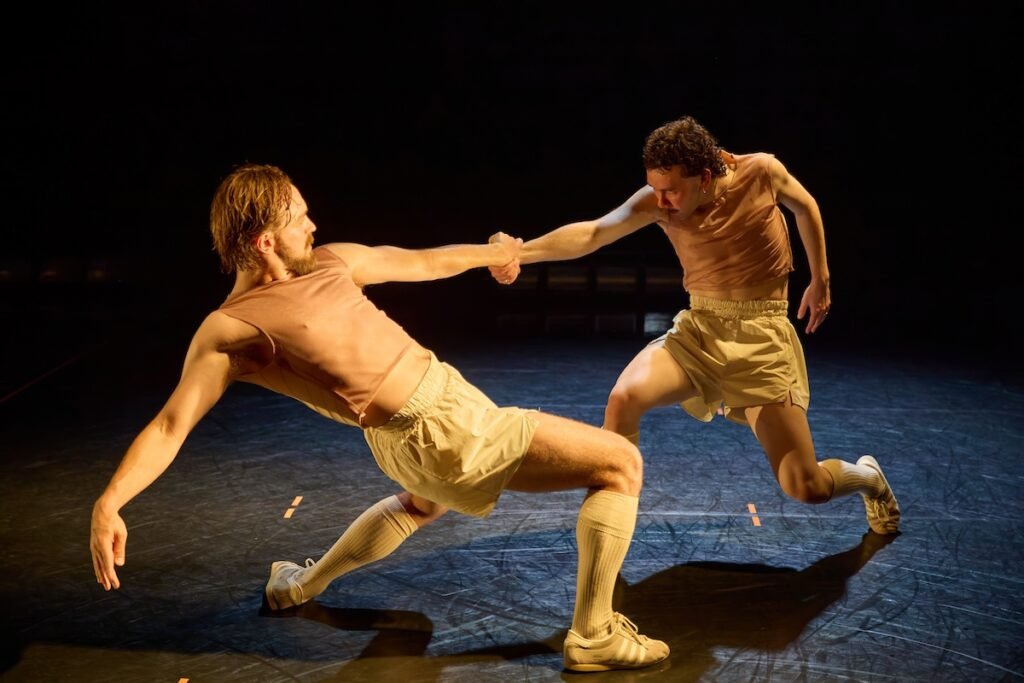
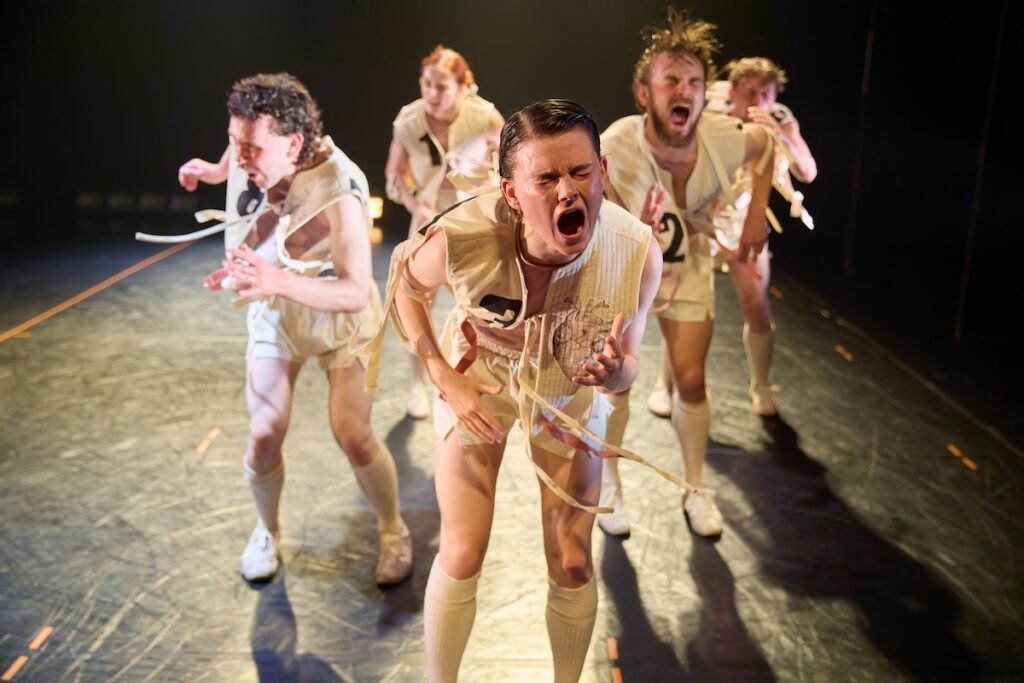
There is clearly a great deal of talent and ambition on display here, and the six dancers are all highly skilled performers. There are moments when the production hints at something genuinely exciting, particularly in the second act when the lighting becomes more adventurous. Unfortunately, those moments are too few and far between, and the overall piece never succeeds in bringing its many ideas together into a coherent whole.
The first piece was performed on a white dance floor running up and downstage, which unfortunately exposed both the joins in the floor and a lack of precision in the dancers’ formations. When six professional dancers come downstage in a line, I would expect the spacing between them to be consistent rather than approximate.
The same lack of attention to detail was evident in the masking. The hard legs were not properly aligned, with the downstage-left leg further onstage than those behind it. On a one-day-per-venue tour this can happen, but for a week-long sit-down I would have expected greater care in the get-in and presentation.
A lot of the dancing felt free-form, almost like free expression, with relatively few moments when all six dancers were performing the same choreography. When those moments did occur, a lack of unison was evident. The dancers themselves clearly possess considerable technical ability, but technical skill alone doesn’t create a cohesive performance or narrative. What is missing is a stronger sense of storytelling, spatial awareness, character and performance direction. Instead, we are presented with a succession of ideas that never quite come together.
The design consisted largely of 15 cloth panels, lit from overhead with very little side light and minimal front light. For a piece lasting only an hour, there were an extraordinary number of blackouts, which made the work feel disjointed. That might have been less problematic had there been a narrative I could follow, but the story was largely incomprehensible, including the unexplained appearance of a large bear.
The use of a hand-held building-site work light on a cable, followed later by a lamp ball, did little to suggest an original visual language. Much of the staging felt more like a dance-school exercise than a fully developed professional production. I half expected someone to appear with a torch and start up-lighting their own face.
The printed programme states that “running can become a metaphor for rebirth”. I briefly found myself wondering whether “wanky” should be spelled with an ‘e’, before deciding that perhaps this particular adjective was best left unused.
There is a danger when the choreographer effectively becomes the director of a dance piece that individual ideas from the creative team can remain just that — individual ideas — rather than being brought together by a single overarching vision. That seems to be what has happened here. The production needs a strong overall director to act as the creative captain of the ship and bring the various elements into a coherent whole.
There was little in the way of conventional partnering, lifts or ensemble interaction; instead, the movement was punctuated by strange sounds, blackouts and occasional piano passages. The result was difficult to engage with.
After the interval, the white floor had disappeared to reveal a better-laid black dance floor running across the stage. The lighting rig had also been flown out and new more substantial rig flown into view. Par cans from the rear, sides and overhead initially promised something with a wonderfully retro 1970s Genesis aesthetic.
Sadly, that excitement didn’t last. Act Two delivered another largely incomprehensible dance piece, although again the dancers performed it with considerable skill.
If the Arts Council had somehow resurrected Kenny Everett and asked him to choreograph the opening dance for Night of the Crabs, performed in see-through mesh crop tops and baggy shorts, this might be roughly what he would have come up with.
Highly funded by the Arts Council, but I did leave the venue wondering what I’d just seen.
Photo credit: Jorge Lizalde
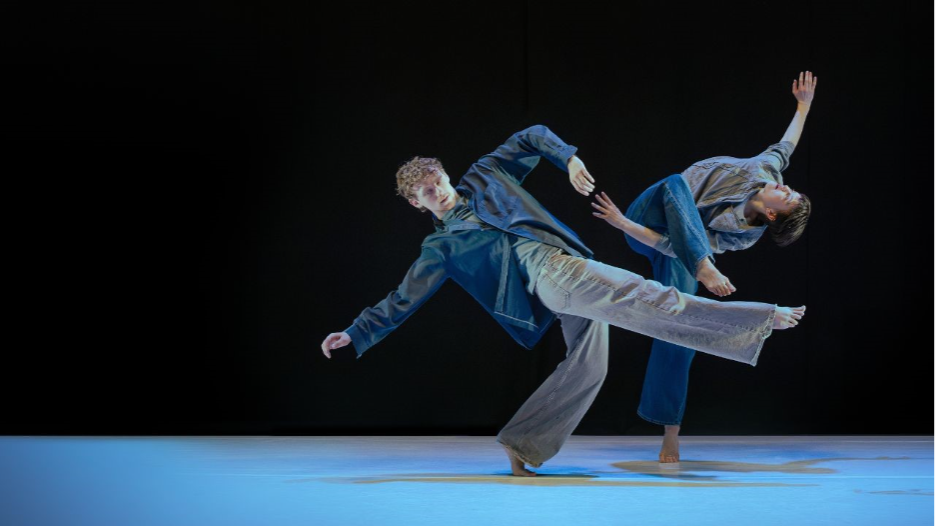
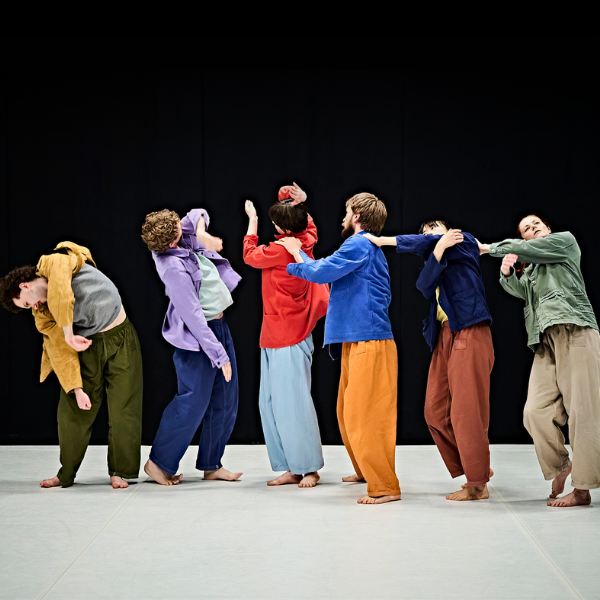
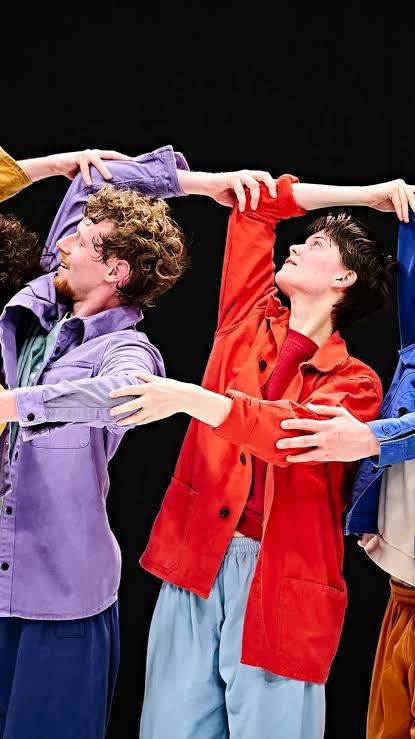
Photo credit: Mark Douet
Cast / Dancers
- Sonny Connor Bell
- Andrew Lennox Scott
- Sarah “Riz” Golden
- Ed Myhill
- Jill Goh
- Alys Davies
Ordinary Courage
- Choreographer: Theo Clinkard
- Music: Alan Stones, incorporating Scarlatti and Bach
- Lighting Designer: Zerlina Hughes
- Costume Design: Theo Clinkard
- Costume Supervisor: Amy Barrett
- Bear Costume Design/Maker: George Hampton Wale
Untamed
- Choreographer: Alesandra Seutin
- Rehearsal Associates: Isaac Ouro-gnao, Nandi Bhebhe
- Composer: Randolph Matthews
- Musical Collaborator: Sam Frankie Fox
- Lighting Designer: Elanor Higgins
- Designer: Ryan Dawson Laight
- Costume Supervisor: Deryn Tudor
- Pibgorn: Stephen Rees
- Local Voices: Ayoub Boukhalfa, Emily Soord, Hazel Anderson, Hussein Mohamed, Jane Billinge, Kat Rees, Sam Frankie Fox
The production is being presented under Artistic Director Bakani Pick-Up, who is leading NDCWales for the 2026 season.
NDCWales production team
- Artistic Director / Joint CEO: Bakani Pick-Up
- Executive Director / Joint CEO: Amanda Roberts
- General Manager: Chris Ricketts
- Head of Production: Geraint Chinnock
- Company Manager: Karen Thomas
- Marketing Manager: Megan Pritchard
- Engagement Artist: Siân Rowlands
Touring technical team
- Stage Manager: Harvey Evans
- Lighting Technician: Daisy Hardwick
- Sound Technician: Archie White
National Dance Company Wales – Blue | Glas
Venue: Sadler’s Wells East, Stratford
Dates: 24–26 September 2026
Performances: 7:30pm
Running time: 1 hour 35 minutes, including a 20-minute interval
Ticket prices: From £15 + £4 transaction fee
Age guidance: 7+
Booking: Sadler’s Wells
Accessibility: Wheelchair spaces and audio-described performances available.
The London performances specifically listed on the main booking page are Friday 25 September at 7:30pm and Saturday 26 September at 7:30pm, both currently showing from £15.
Tickets: Click here