

Unseen in London for 99 years, Noël Coward’s characteristically witty, startlingly modern, and surprisingly feminist comedy, Sirocco opens at the multi-award-winning Finborough Theatre for a strictly limited four-week season. Sirocco is one of Noël Coward’s least-known plays, long misjudged on one of the most infamous opening nights in theatrical history, which saw fistfights after the final curtain and Coward himself spat at outside the Stage Door. But now director Brigid Larmour’s research has uncovered another factor in its original failure: the sharpest and most provocative writing in the play had been cut, for fear of the Theatre Censor.
Review by Stephen Gilchrist.
I have long since, bored my friends with the serendipity of my life intersecting with that of Noel Coward. The 1964 Old Vic production of ‘Hay Fever’, directed by Coward himself, was the first straight play I ever saw. I met the great man a year later at the stage door of the Queens (now Sondheim) theatre when he was visiting a production of ‘Present Laughter’. I almost bought his famous house in Kent – Goldenhurst – in the ‘80s, but was gazumped, and later still, while formed a friendship with his biographer, the late, great Sheridan Morley, with whom I spent happy moments discussing Coward.
And so I was delighted to see, if not an undiscovered then certainly a recently recovered play from the author’s young days being championed by the intimate Finborough Theatre and ‘adapted’ and directed by the talented Brigid Larmour whose direction of the gender reversal ‘Merchant of Venice 1936’ was, in my view, first class.
If I’m honest, this is not top-drawer Coward but is certainly superior to much of what passes for entertainment on Shaftesbury Avenue these days. It is witty, dramatic, provocative and punchy and indeed risqué for its time. It starts thus, in typical Coward fashion, making the audience laugh from the get-go
Mrs. Griffin: It wasn’t only because she was a Catholic that I disliked her, after all there are some very nice, pleasant Catholics; I’m quite broad-minded enough to admit that, but. somehow
Miss Johnson: I quite understand, Mrs. Breeze, it’s your nature. I’m like that too, everything must be above board with me.
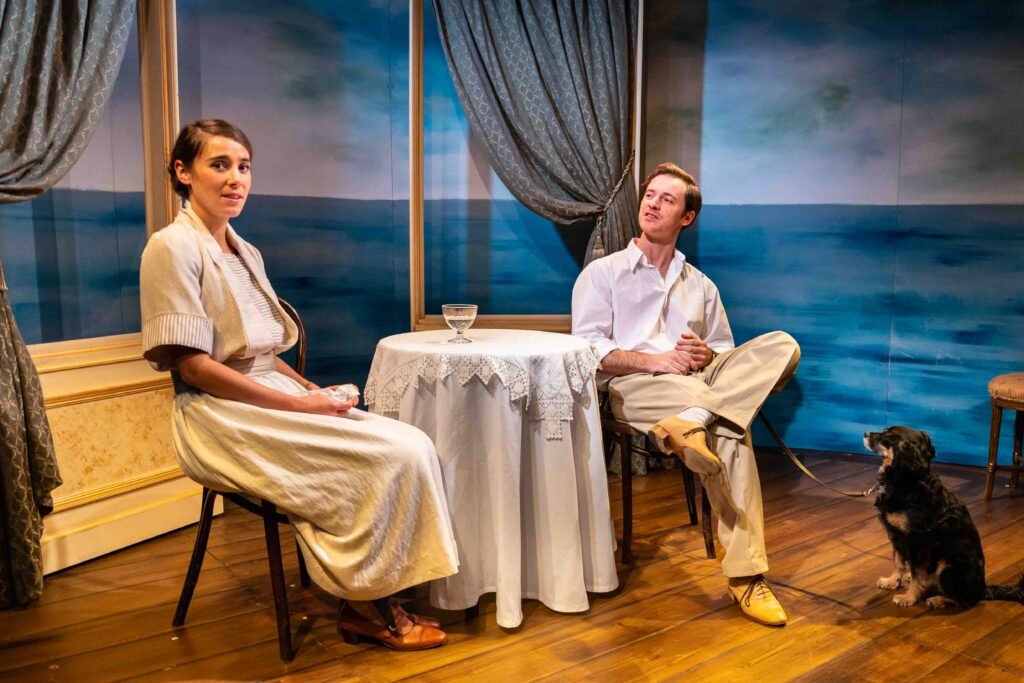
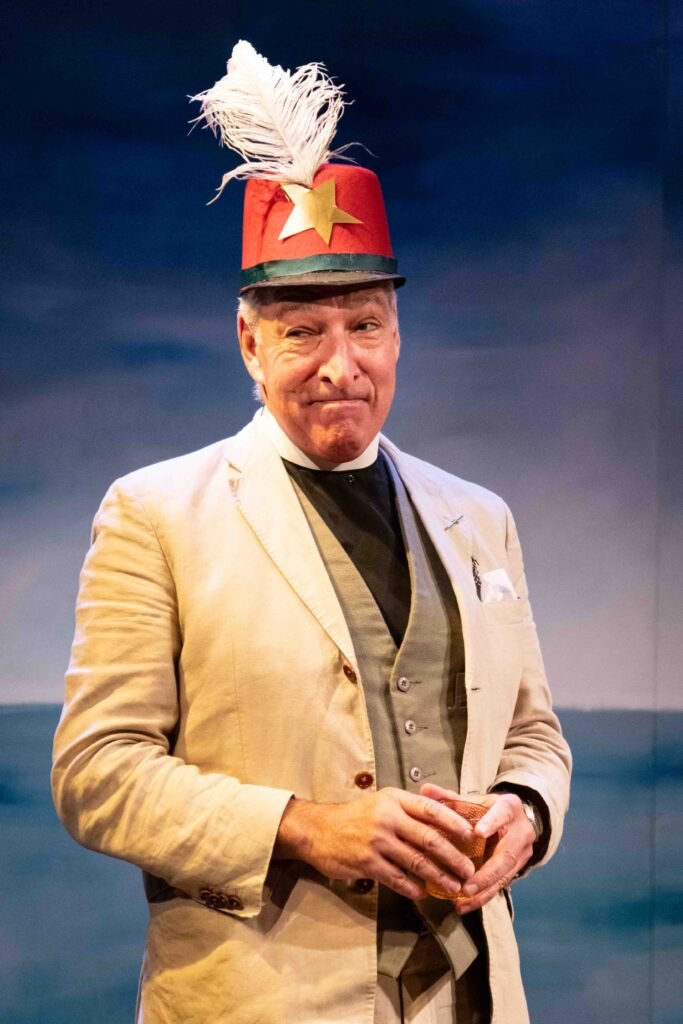
These are two women of a certain age and caricatures of the English abroad, in this case The Palace Hotel Belagulia in Northern Italy. It is 1921. They are soon joined by Stephen Griffin, stiffly British son of the above mentioned who is soon to be away in Tunis on business, his three year wedded wife, Lucy, her bouncy friend, the American Francine (in Coward’s words in the published play script, “The adjective ‘vivacious’ describes her mercilessly”) a young Italian lothario, Sirio Marson and the larger than life The Reverend Sampson Crutch.
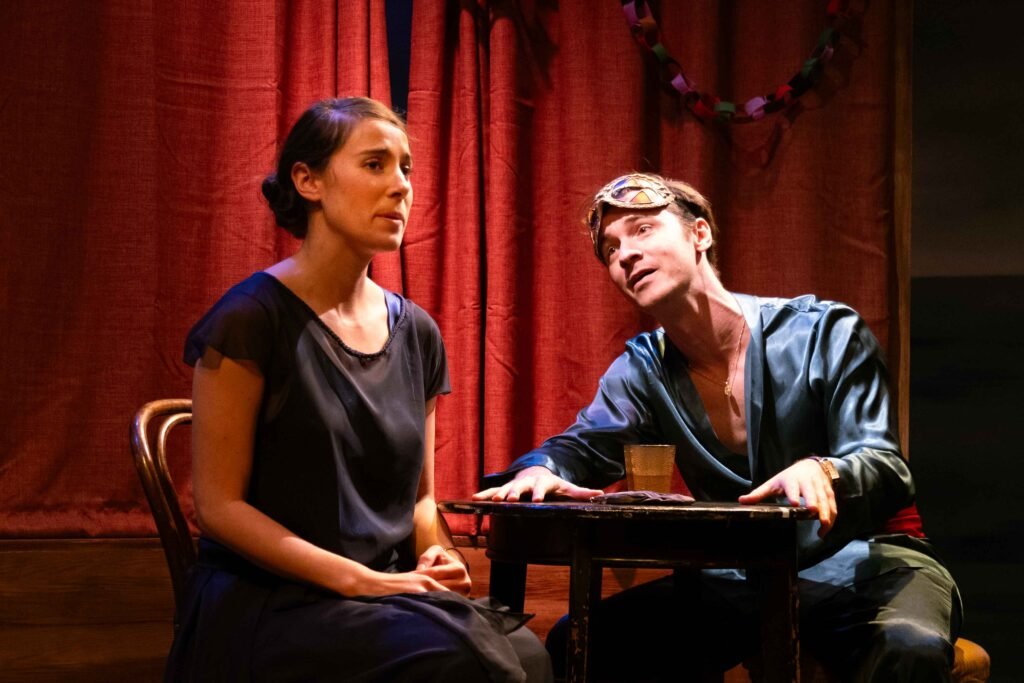
As in many Coward plays, daring for their time, adultery and louche morality fester beneath the surface as the bohemian painter Sirio seduces Lucy, revealing her to be dissatisfied with her life as a second string to her pompous husband’s life. As she says
“Lucy: I’ve been married three years, you know
Francine: And you can’t bear Stephen to go out of your sight—if that isn’t love, I’d like to know what is
Lucy: So should I.”
Lucy runs away with Sirio, and in the finale at which she takes charge and finishes that relationship, one hopes, she finds herself. In her words, and, again from the published playscript
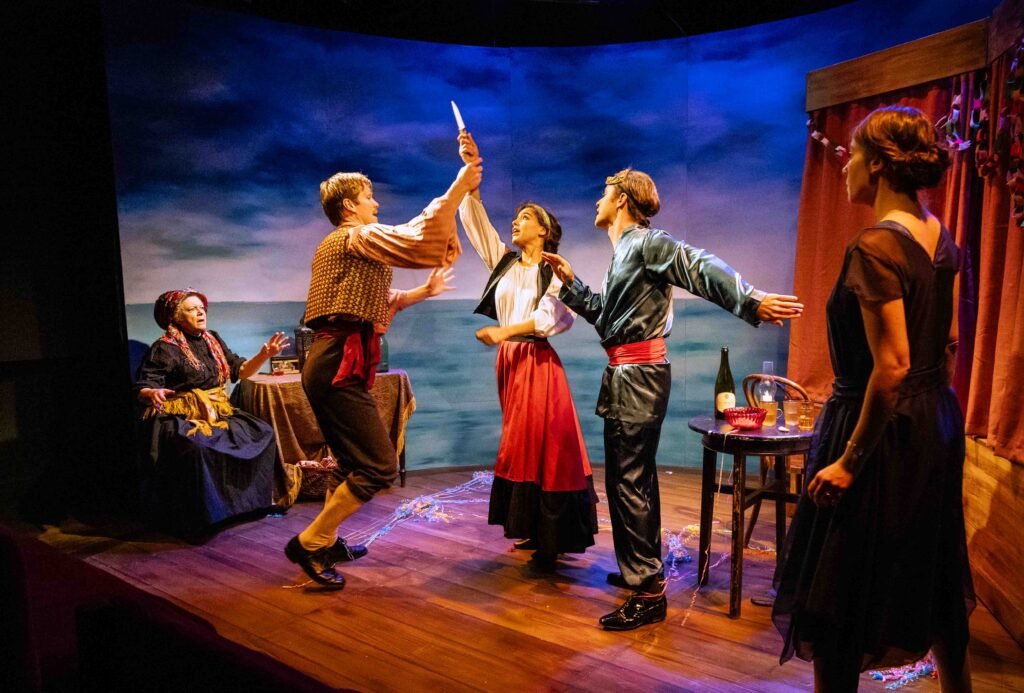
Lucy: (suddenly lifts her arms above her head. With exultance): I’m free—free for the first time in my life. (Her face changes.) God help me!
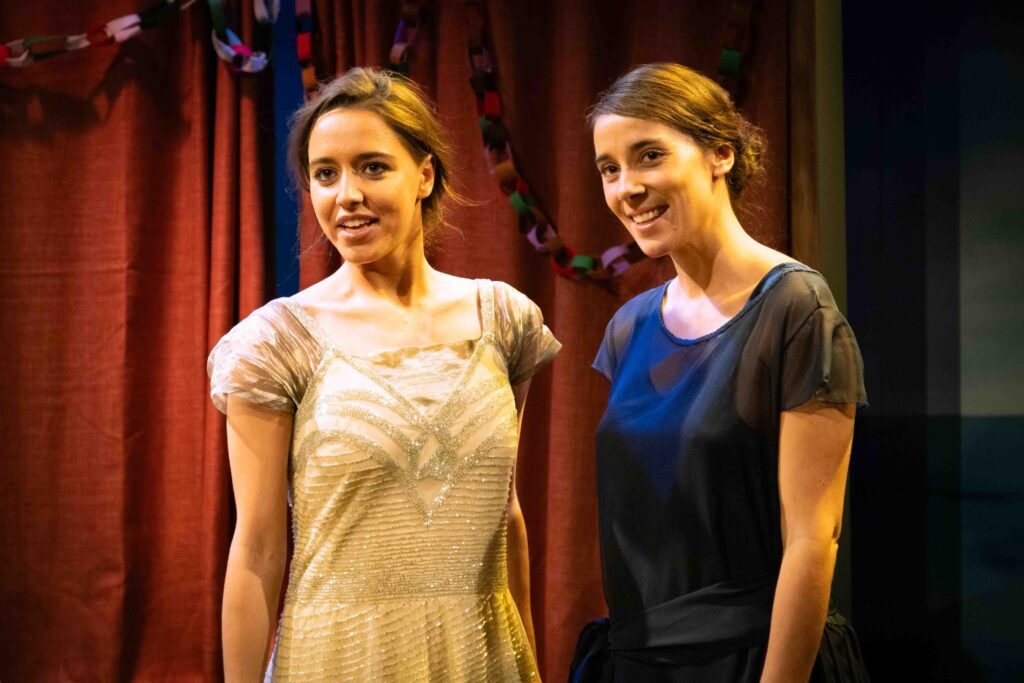
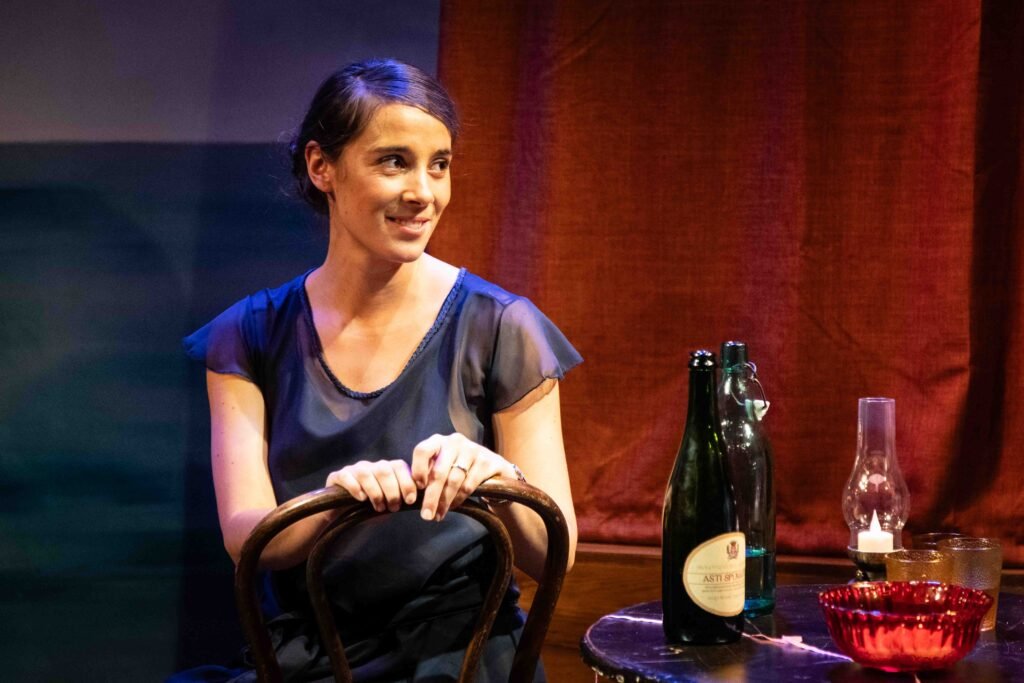
Coward wrote marvellous parts for women, strong women, or those made strong by circumstance and this play is no exception. Gráinne Dromgoole as Lucy is absolutely smashing, authentic in her evolution from chrysalis to butterfly. She is well matched by both her charismatic and flamboyant lover as played by Giulio Cavazzini and by George Kemp as her imperious, condescending, and emotionally detached husband. There is a scene stealing performance from Giorgia Laird as Francine and valuable contributions from Miles Richardson as the booming Reverend, Amanda Bellamy as Mrs Griffin and Julia Watson as the gossipy Miss Johnson.
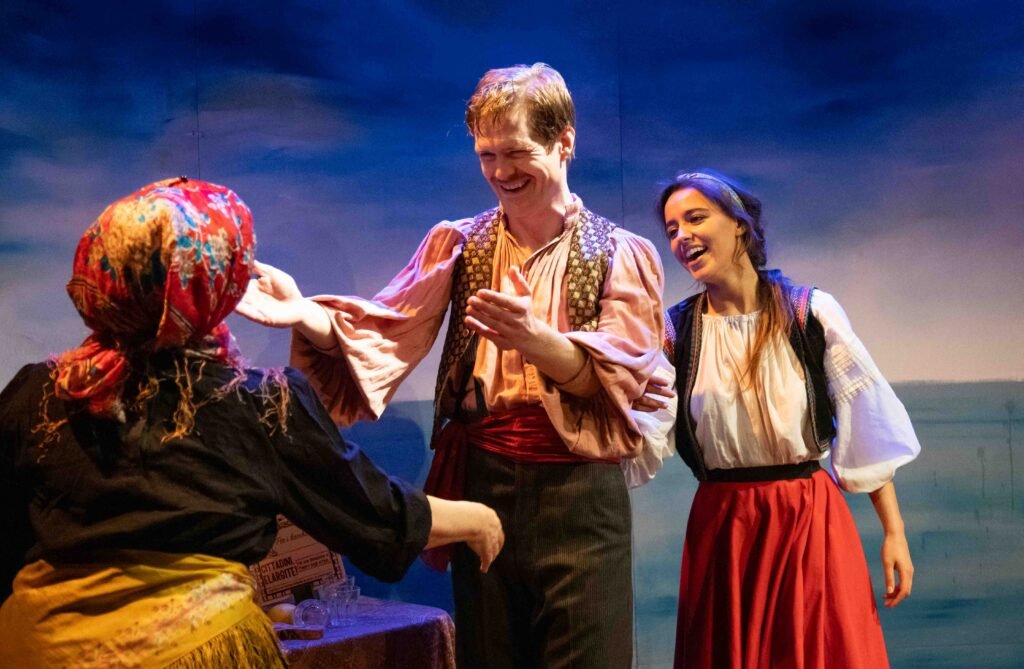
Larmour has adapted this piece from different drafts of the play. All the words are Coward’s though, in her words, some are ‘drawn from different places in various versions’. No matter. The play was clearly ahead of its time and light years ahead of the Lord Chamberlain’s censorship office. Larmour’s version is set against some passionate local colour at the ‘Festa’ involving boisterous, locals whose sweeping gestures and open emotion define the pulse of the piazza. Juliette Demoulin’s simple settings with a sea shore cyclorama work a treat.
Noël Coward famously shrugged off the notorious 1927 opening-night failure of Sirocco, remarking that if he was going to have a flop, he liked it to be a “rouser”. The Finborough production is definitely no flop and, in this production, shows how ill-judged was the audience ninety nine years ago. This ‘lost Coward’ deserved to be revived and, I suspect will attract a loyal following from audiences and critics alike in decades to come. It was a jolly good evening.
Cast
Amanda Bellamy – Mrs Griffin / Old Giulia
Giulio Cavazzini – Sirio Marson
Gráinne Dromgoole – Lucy Griffin
George Kemp – Stephen Griffin / Giuseppe
Giorgia Laird
Miles Richardson – Reverend Sampson Crutch
Julia Watson – Miss Johnson
Evie – Canine performer
Creative team
Noël Coward – Writer
Brigid Larmour – Director and Adaptor
Juliette Demoulin – Set Design
Arnim Friess – Lighting Design
Ed Lewis – Sound Design
Carla Joy Evans – Costume Design
Jillian Feuerstein – Assistant Director
Ciara O’Neill – Stage Manager
Andrew Maunder and Neil McPherson – Producers
Carla Joy Evans – Production Photography
Finborough Theatre – Production Company
SIROCCO
By Noël Coward in a new version edited by Brigid Larmour
Finborough Theatre
24 November – 22 December