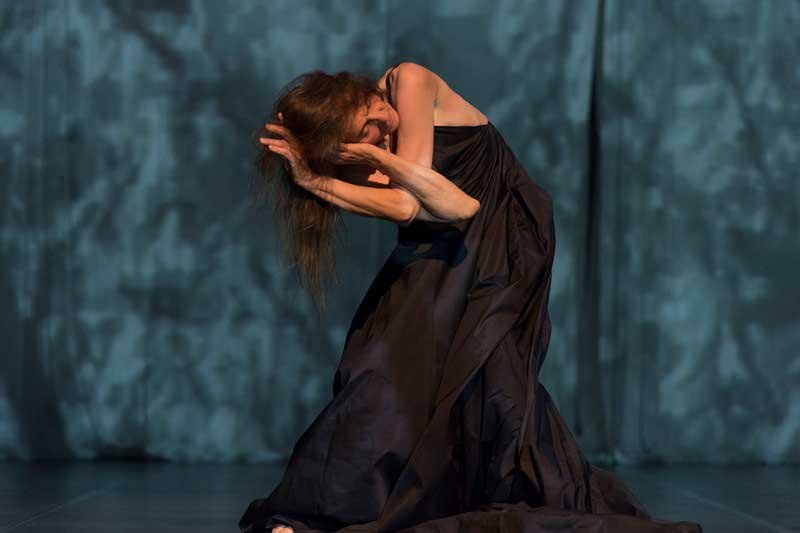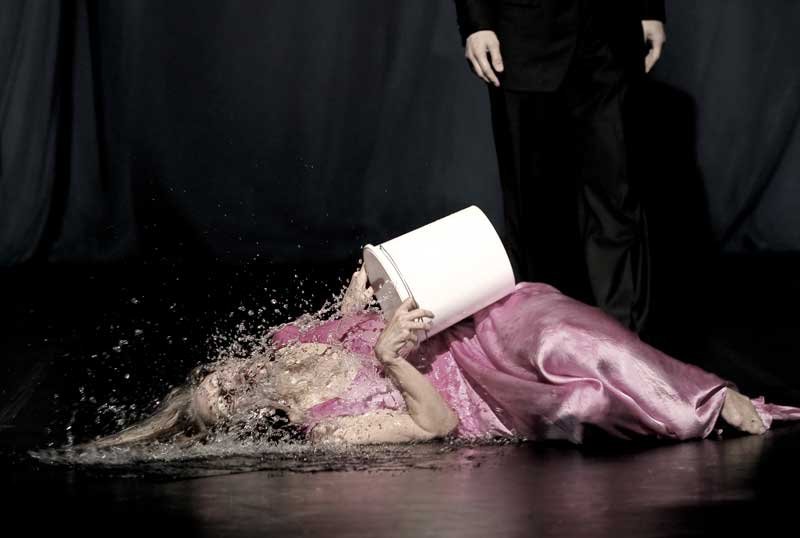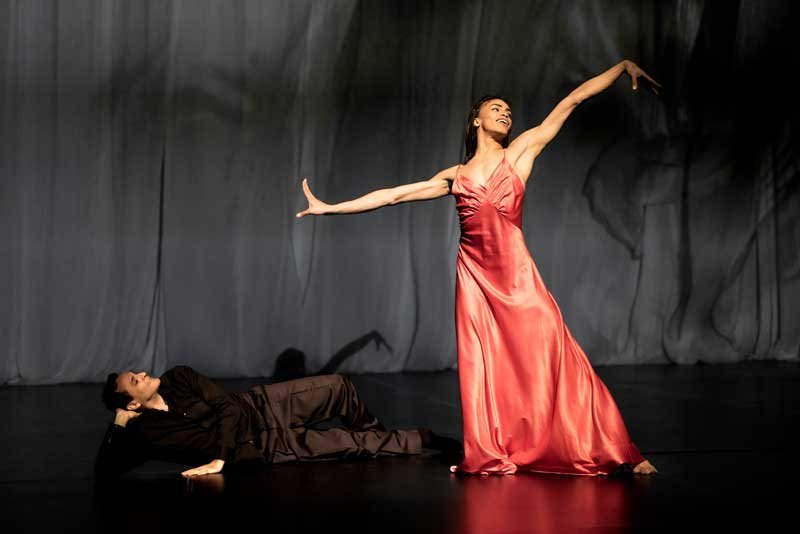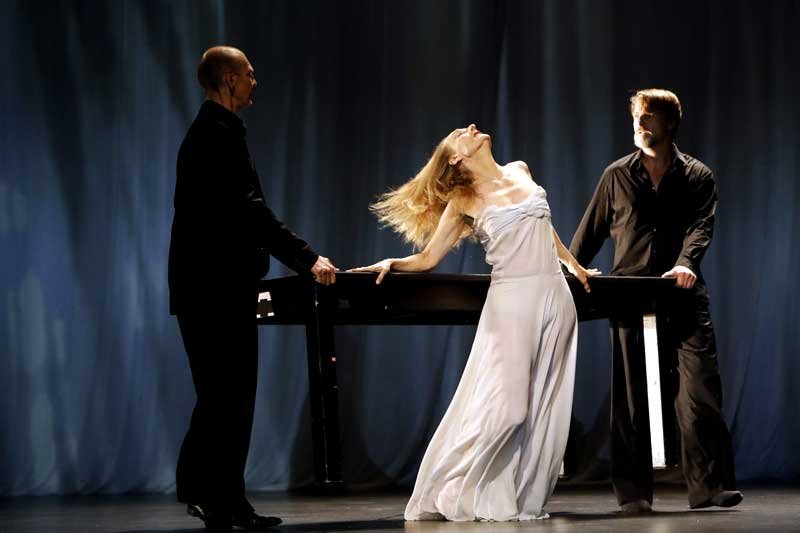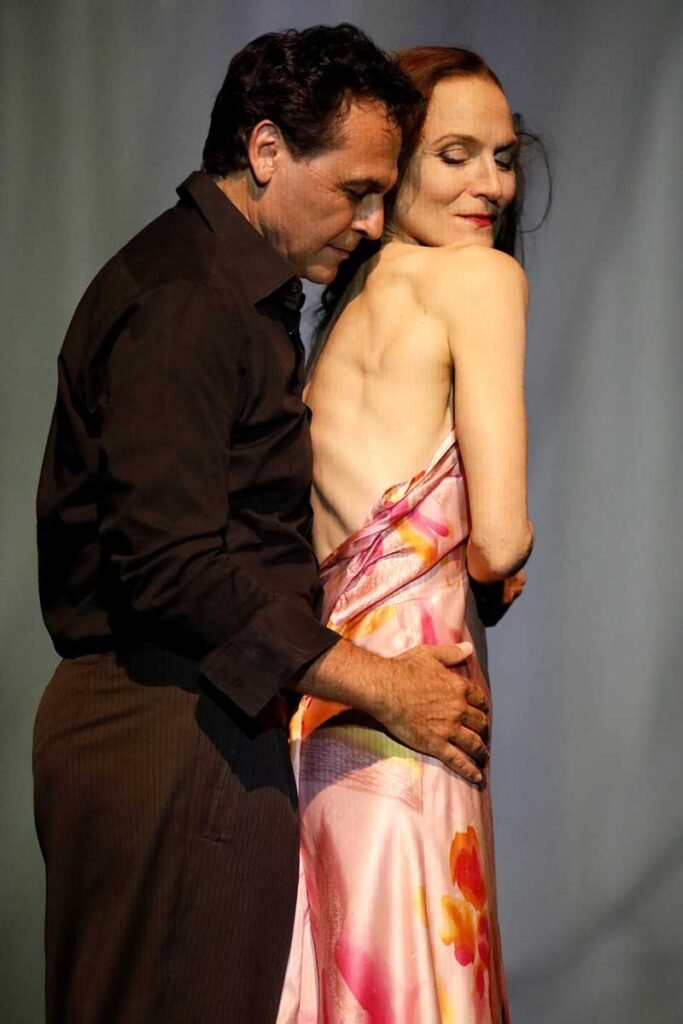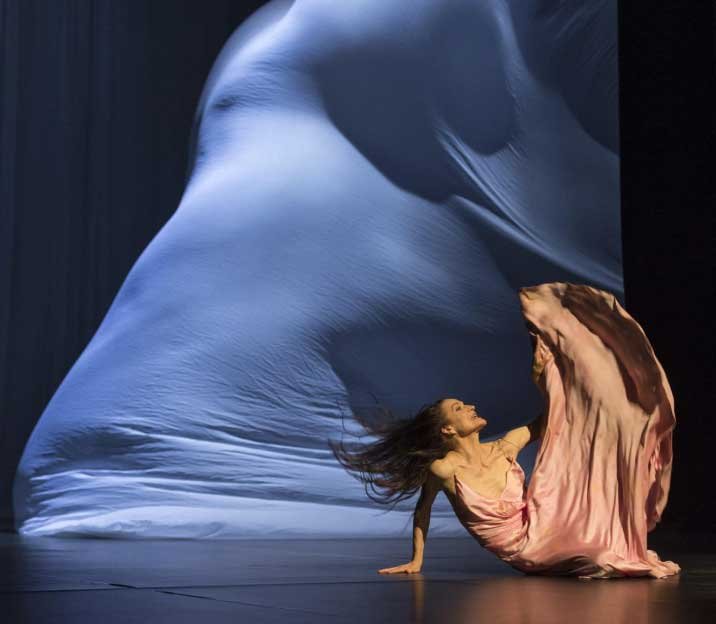
‘Sweet Mambo’ is one of many pieces in Bausch’s repertoire representing a nearly 30 year-long collaboration between Bausch and Peter Pabst, the original set designer for the piece. Characterised by billowing drapes which were also used in Bausch’s 2007 piece Bamboo Blues, ‘Sweet Mambo’ sees Bausch’s dancers interact with the curtains. Pabst’s set design maintains an active conversation with the choreography, which lends ‘Sweet Mambo’ Bausch’s signature visceral qualityh in its unique narrative, demonstrates the female psyche and intellectual disposition
Review by Stephen Gilchrist
Philippine “Pina” Bausch died in 2009. She was a German dancer and choreographer who was a significant contributor to a neo-expressionist dance tradition now known as Tanztheater, and ‘Sweet Mambo’ is her penultimate creation which she originally directed and choreographed. Whenever I visit contemporary dance, I am always reminded of the iconic dance scene from the 1957 film “Funny Face” which was a parody of modern and interpretive dance, by Audrey Hepburn. Or even “Choreography,” the musical number in the movie ‘White Christmas,’ in which Danny Kaye actually mocks the queer roots of the new dance directors
But the more contemporary dance that you see, the more, I would argue, that there are, in that world, creators of genius whose synthesis of dance, mime, movement, music and design can reflect in its individual and artistic presentation, authentic inner feelings and the angst of life. It is a countermovement to classical ballet. And there few who have mastered the style more so than Bausch. She created ‘Sweet Mambo’ in 2008 and were privileged to see it at Sadlers Wells.
What is it about? Like much contemporary dance, its meaning is subjective. It is a fantasy of mature sensuous, slinky, elegant and deliberately and amusingly inelegant, female dancers (beautifully costumed by Marion Cito) bending willow-like limbs, imaged by long, soft curves, flexibility, and flowing motions. It is set against an evocative, abstract landscape designed by Peter Pabst, featuring towering, and billowing ethereal white fabric drapes that create a surreal, dreamlike atmosphere. The drapes seem part of the choreography. There are six female dancers and three men. They represented to me an introspection of how women see themselves, see each other, men, and indeed the audience.
This is a feminist piece, or so it seemed to me. Women pair with partners, are used and abused by partners, and worshiped by partners. The two-act show is set against an eclectic music score ‘collaborated’ by Matthias Bukert and Andreas Eiseschneider which is sometimes lush, often rhythmically repetitive and frequently with a Latin beat. The musical repetition is replicated in the dance moves, vignette’s which are often repeated through the evening, until the ensemble is mired in confusion in a maelstrom of chaos. The effect is hypnotic.
Words are also used by the dancers as they breach the fourth wall and address the audience, sometimes challenging, demanding we remember them and their names, screaming, or regaling us with non sequiturs, one triumphantly explaining how she loves performing cartwheels in various cities around the world whilst performing them, another in the style of Cabaret’s Emcee spookily and mockingly telling us how life is like riding a bicycle. Yet another appears desperate to run to a male offstage voice calling her name, whom she is prevented from reaching by two men who repetitively drag her back.
To a large extent the three men, although essential to the performance, are in reality adjuncts, ciphers, their role performative. The women are centre stage and rightly so.
I mentioned the maturity of the female dancers. For the most part they are veterans of the Bausch company, the oldest, Nazareth Panadero, now in her seventies, funny, idiosyncratic in her character role. The others are largely in their 50s and 60s (though you would not know it from their agility and physical pliancy). All have their solos and all are outstanding, Julie Shanahan especially so.
I would not be honest if I did not say that despite its power and beauty, the presentation did not somewhat overstay its welcome as a full evening’s entertainment, but overall, I return to my descriptor that this is a work of some genius and brilliance which in its unique narrative, demonstrates the female psyche and intellectual disposition.