
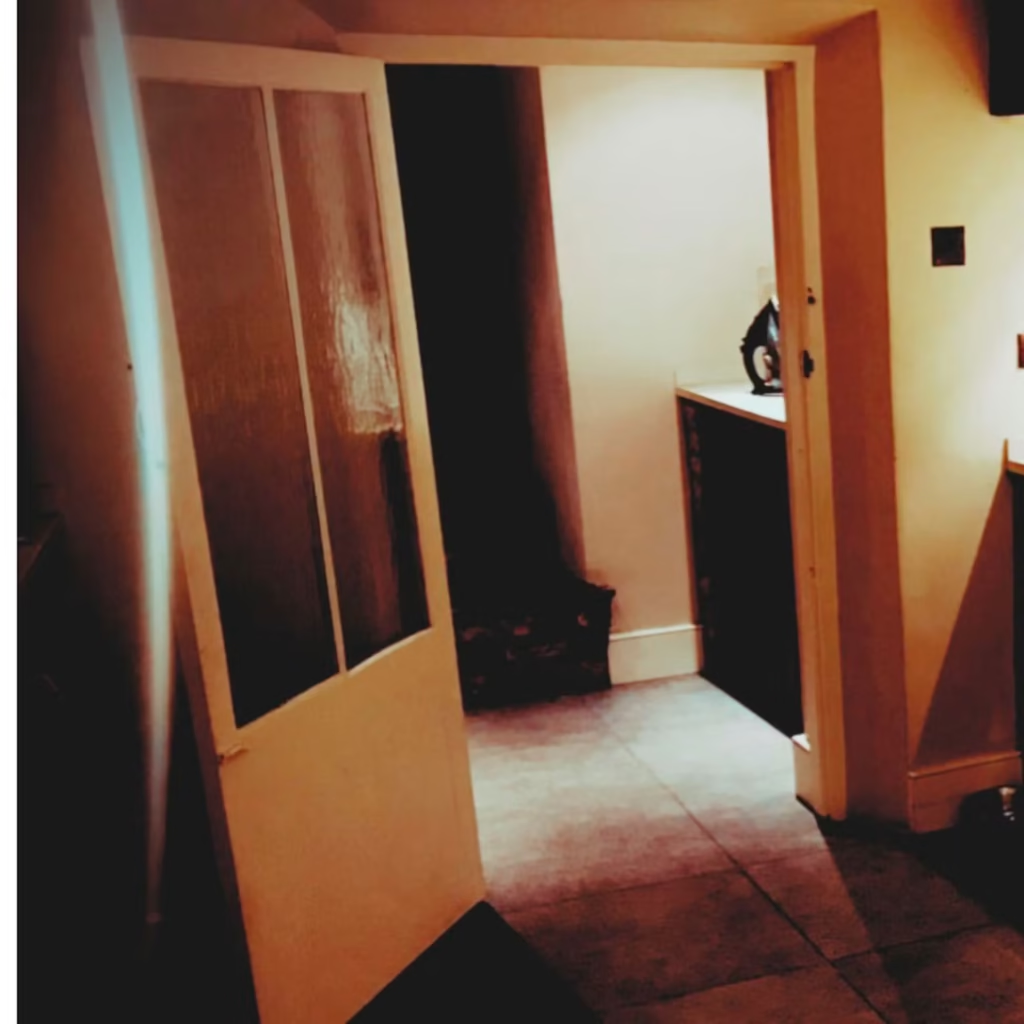
Grace’s husband, Chris, is dying. One day her carefully constructed world is disrupted when Themba, a professional end-of-life carer, secretly hired by Chris, arrives to help.
Initially resistant, Grace gradually forms an unexpected and complicated bond with Themba. As Chris’s condition deteriorates, Themba becomes both a practical support and an emotional confidant, allowing Grace to confront the exhaustion, fear and loneliness she has been hiding. In turn, Grace encourages Themba to reconsider the dreams he has put on hold. Their growing intimacy creates a tension between love, grief and the possibility of a life beyond caregiving.
With plenty of humour alongside the heartbreak, The Other Room explores what happens when death takes over the house, but life, inconveniently, keeps getting in the way.
Funny, frank and ultimately very human, it is a story about death that is really about how we carry on living, and how our dreams don’t have to die with the people we love.
Review by D. C. Jackson.
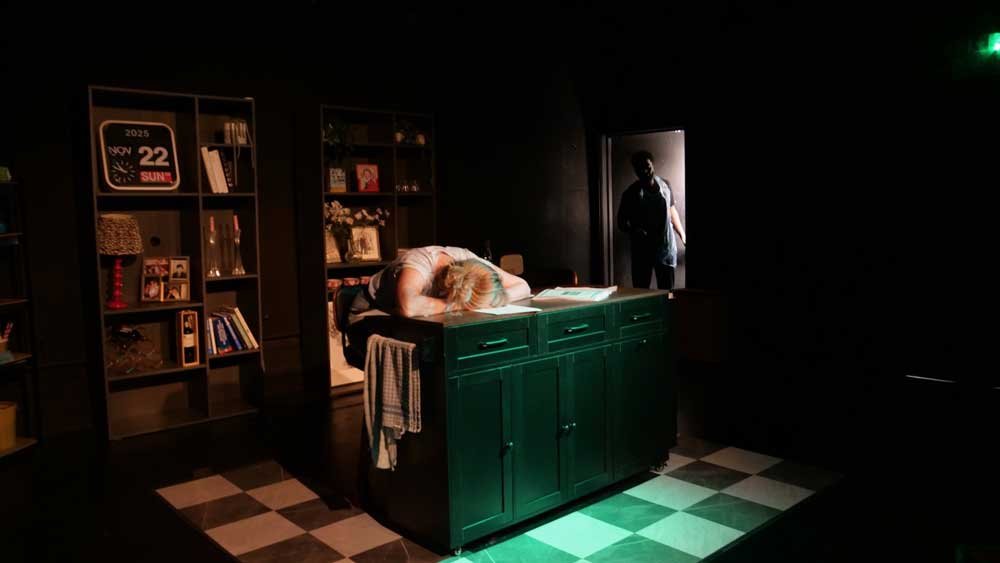
The play opens in the kitchen of what initially feels like a typical family home. However, behind the walls, Grace’s husband, Chris, is dying. This contrast between the familiarity of domestic life and the emotional reality of impending loss provides the foundation for the piece.
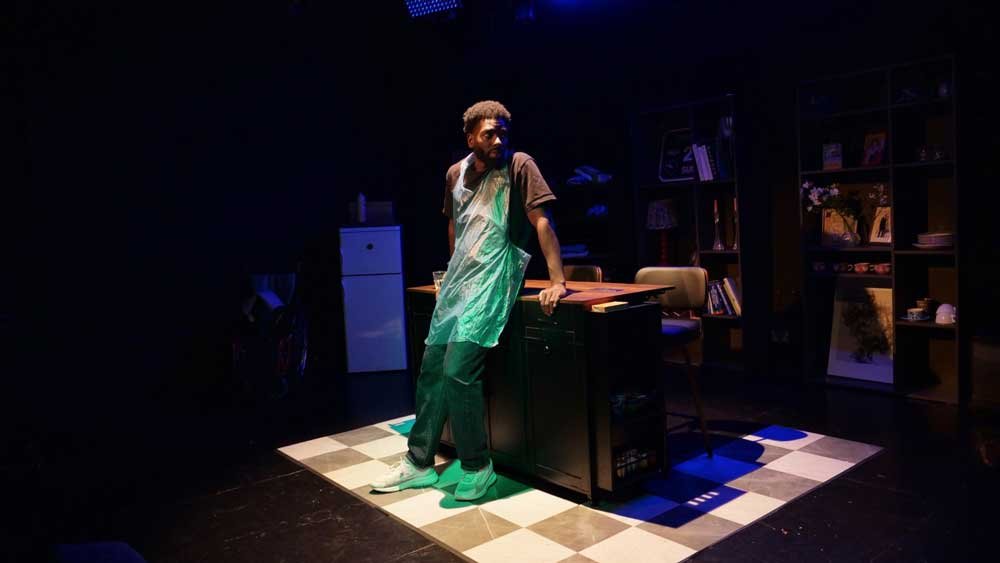
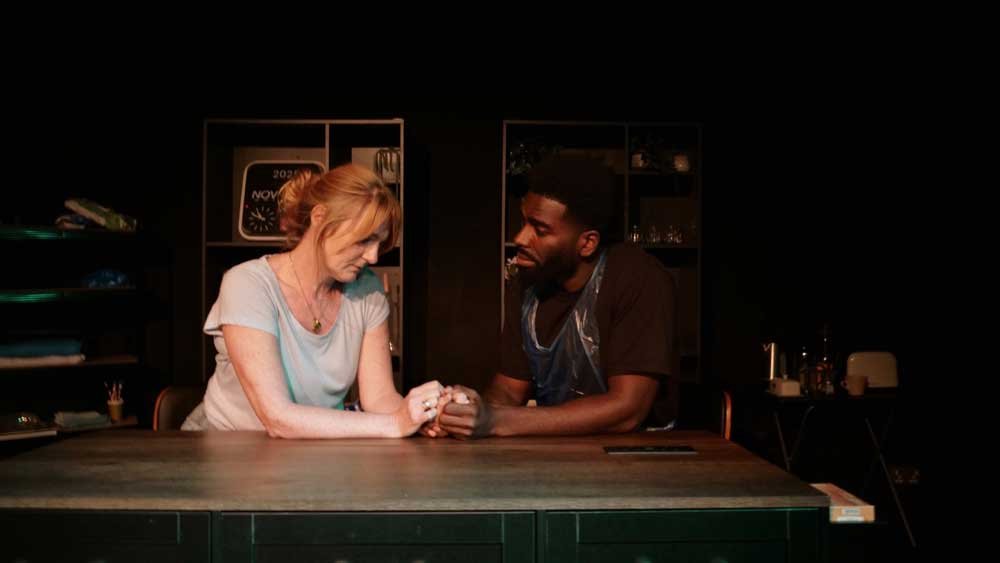
The action remains consistently within the kitchen space, placing the audience inside Grace’s world as she navigates the exhaustion, fear and loneliness of caring for her dying husband. The simplicity of the setting allows the focus to remain on the characters and the emotional complexities of their relationships.
The actors playing Grace and Themba share strong chemistry, and their performances make the development of an unexpected friendship feel genuine. There is a convincing delicacy to their interactions as they gradually become sources of emotional support for one another.
Themba’s compassion for Grace is particularly lovely to watch. His desire to care for her as well as Chris demonstrates an understanding that, while Chris is the one who is dying, Grace is also experiencing an incredibly difficult and isolating period of her life. This is especially evident when Themba encourages her to go to a party, gently reminding her that she is still entitled to have a life beyond her role as a wife and carer. These moments reveal the thoughtfulness of his character and highlight one of the play’s central themes: the importance of remembering to live, even when someone you love is dying.
There are some lovely moments of genuine reminiscence, particularly when Grace puts on the radio and Oops Upside Your Head, the song she and Chris had at their wedding, begins to play. Grace starts dancing around the kitchen, creating a touching glimpse of the couple’s shared history and the happier memories that exist alongside their present circumstances. It is a beautiful reminder that, despite the sadness surrounding Chris’s illness, their relationship is about so much more than his impending death. These moments of familiarity and joy bring warmth and humanity to the piece, making the underlying heartbreak all the more affecting.
The lighting design is particularly effective during scene transitions, cleverly using changes in lighting to shift the atmosphere and heighten the tension. The sequence mimicking the flashing lights of an ambulance siren is especially effective, creating a sense of urgency and unease without the need for elaborate staging. It demonstrates how lighting can be used not only to facilitate transitions but also to deepen the emotional impact of a scene.
One area for improvement is a patch on stage left, closest to the door nearest the audience, where the actors become noticeably less well lit when moving into this space. Adjusting the lighting coverage in this area would help maintain consistent visibility throughout the performance and ensure the actors remain clearly illuminated wherever the action takes them.
For me, the moment that jarred was the accidental kiss between Grace and Themba. Although I understand its dramatic purpose and the shock it is intended to create, I felt that the romantic tension leading up to it needed further development. A little more flirtation or a greater sense of their growing attraction might have helped the kiss feel more earned within the context of the story. Given the otherwise sensitive and carefully observed development of their relationship, this moment felt somewhat abrupt.
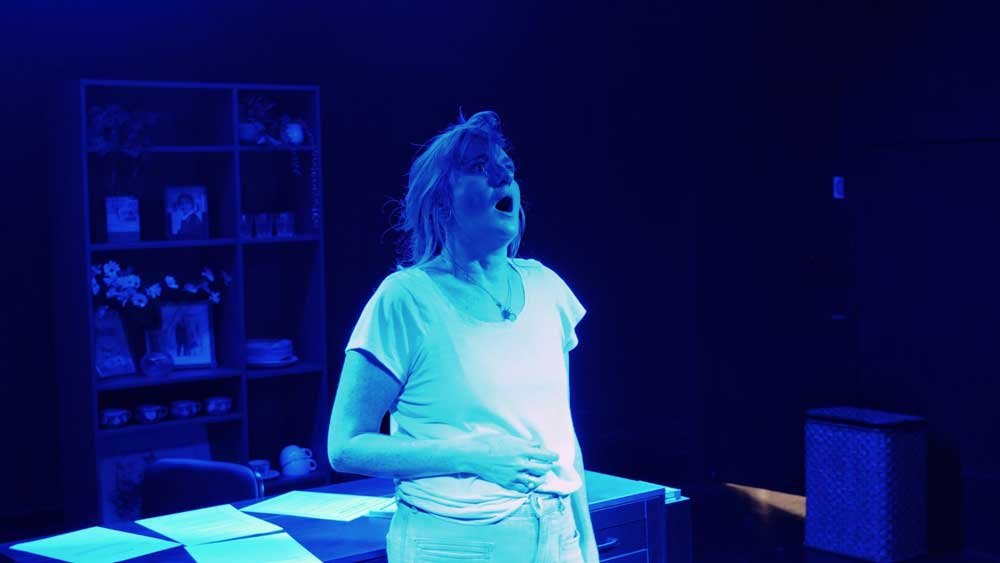
That said, the performances capture the complexity of grief and the difficulty of watching someone you love die with considerable sensitivity. Grace is particularly affecting during the sequence in which we hear the voice-over of Chris receiving CPR. Her physical embodiment of the moment is heartbreaking, communicating the terror, fear and helplessness of the situation without needing to rely on words. It is a powerful piece of acting that brings the reality of anticipatory grief into sharp focus.
Ultimately, The Other Room is a poignant and deeply human exploration of grief, caregiving and the unexpected connections that can emerge during life’s most difficult moments. The performances are strongest when they allow space for the quiet, ordinary details of domestic life to sit alongside the devastating reality of impending loss. Through its humour, moments of reminiscence and Themba’s compassionate care for both Chris and Grace, the production reminds us that, even when death takes over a home, life continues to find ways of making itself felt.
Creatives
Written by Sarah Rickma
Directed by Bellaray Bertrand-Webb
Producer: Ciara Pouncett for Ladybird Productions in association with Proforca Theatre
PR: Matthew Parker
Social Media
Instagram: @ladybirdproductionco & @landutheatre
BlueSky:@landutheatre.bsky.social
Website