
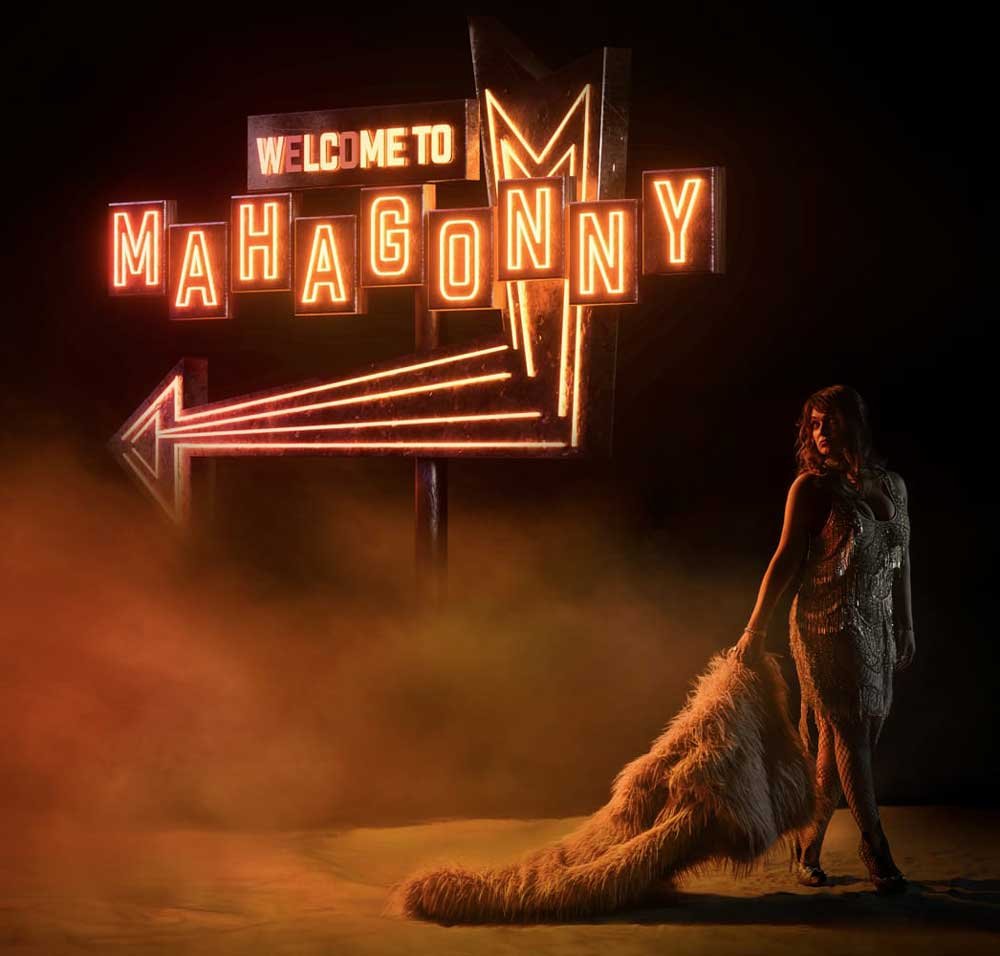
The opera premiered in Leipzig in 1930 to controversy but found huge success in Berlin later that
year. Banned during in the era of Nazi Germany, it went on to become a 20th-century classic, with
international stagings including its celebrated UK debut at Sadler’s Wells Opera (which later
become English National Opera) in 1963, and a famed Met Opera run in New York in 1979.
Review by Stephen Gilchrist.
I first encountered Kurt Weill in the 1960s. I was already a lover of musical theatre and so I trotted along to the Royal Court Theatre one Saturday afternoon in 1965 to see something called ‘Hapy End’. It was the premiere performance of the work in the UK. It was odd, intriguing and like nothing I had seen before. It featured actors who could carry a tune and a small band. And then I realised that my oldest pal, my theatre friend, was actually a member of the Kurt Weill family! Two years later I saw Lotte Lenya in the original Broadway production of ‘Cabaret.’ So, it was with much anticipation that I waited for the curtain to rise on the English National Opera’s first production of Mahagonny. And what a production it was!
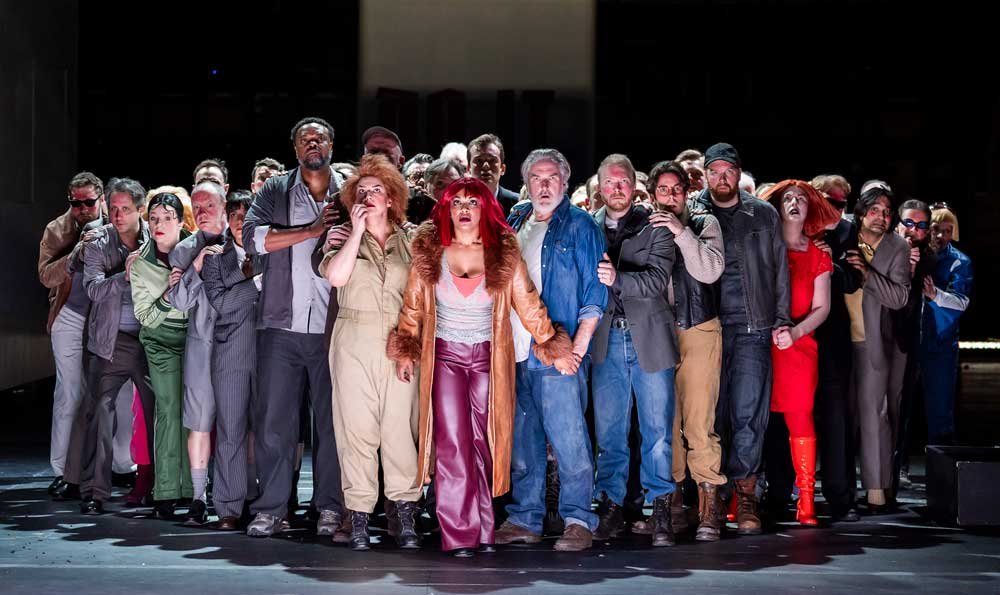
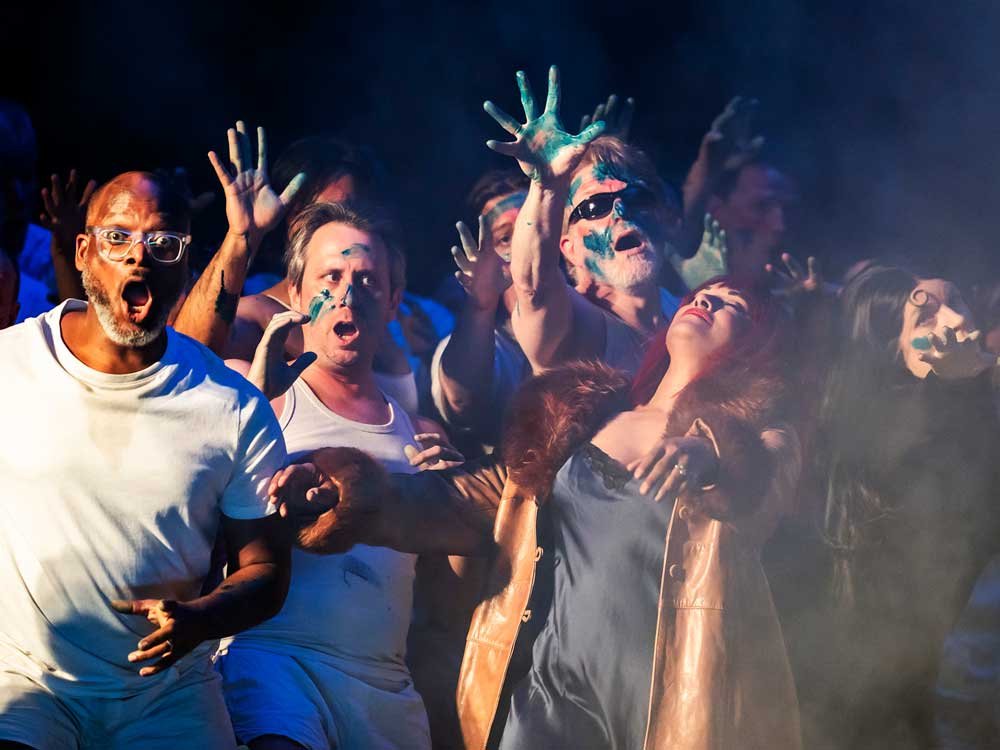
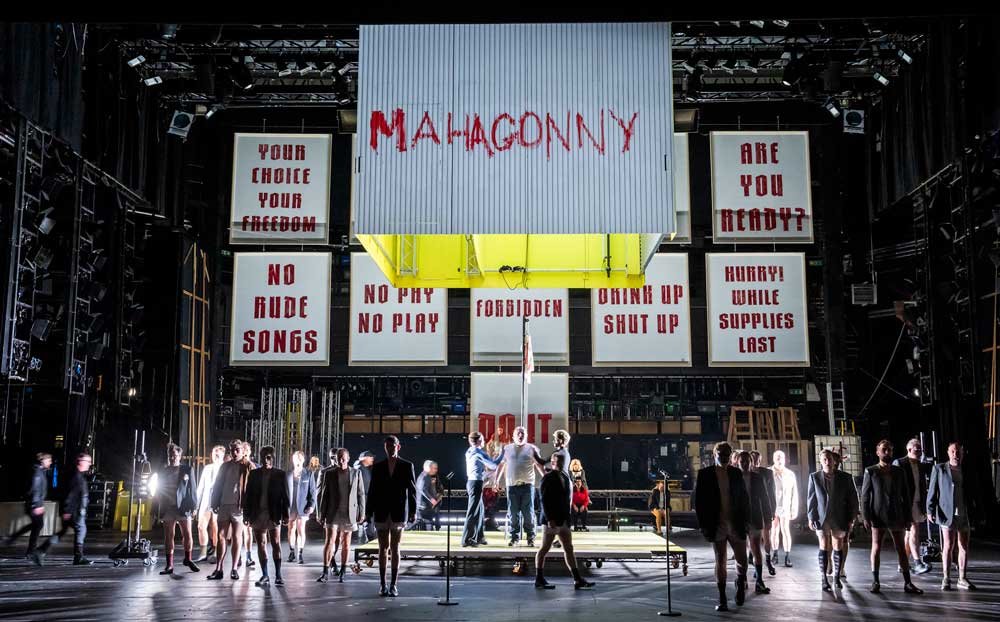
The ENO have thrown everything plus the kitchen sink at this handsome mounting, with, so far as I could make out, an ensemble totalling some fifty souls, a large and gorgeous ENO orchestra, and of course a cast of operatic singers. The work, by Weill and Bertolt Brech, constantly pokes and challenges the audience with its message of the evils of hedonism, materiality, and an overweening love of money, sex and booze, all set in an off centre, stylised, surreal and dystopian version of America, as seen by the anti-capitalist authors, from the instability of the Weimar Republic’s Berlin. Both of them, of course, had to flee from Nazi Germany in 1933 after being targeted by the fascists for their populist and socialist views, and Weill’s Jewish heritage. And how relevant this work remains today!
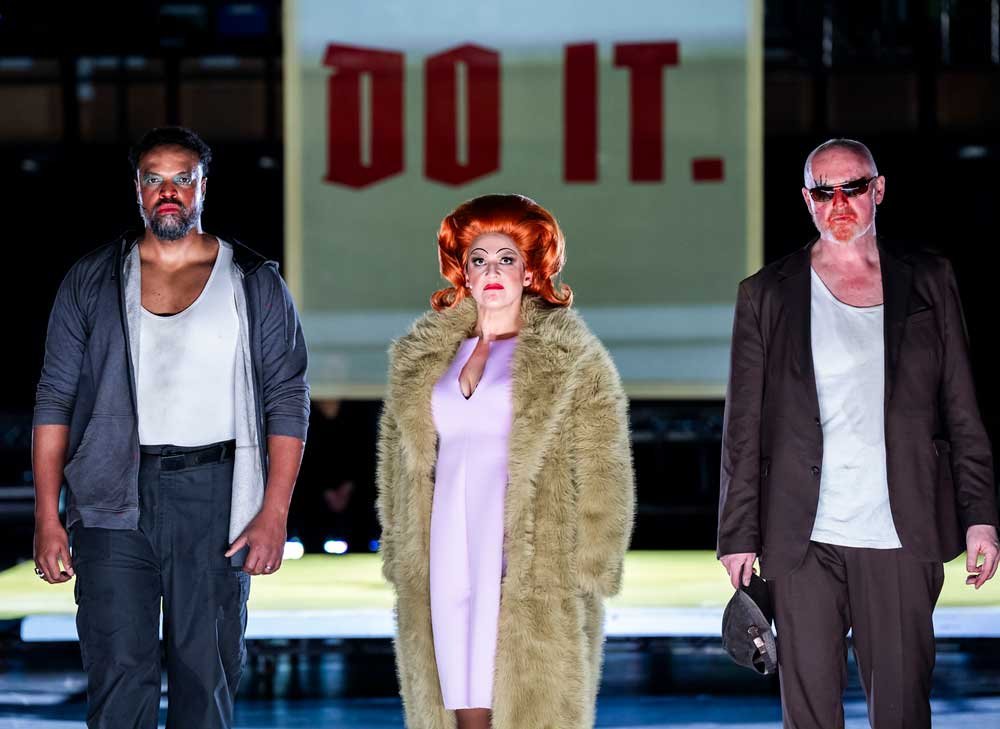
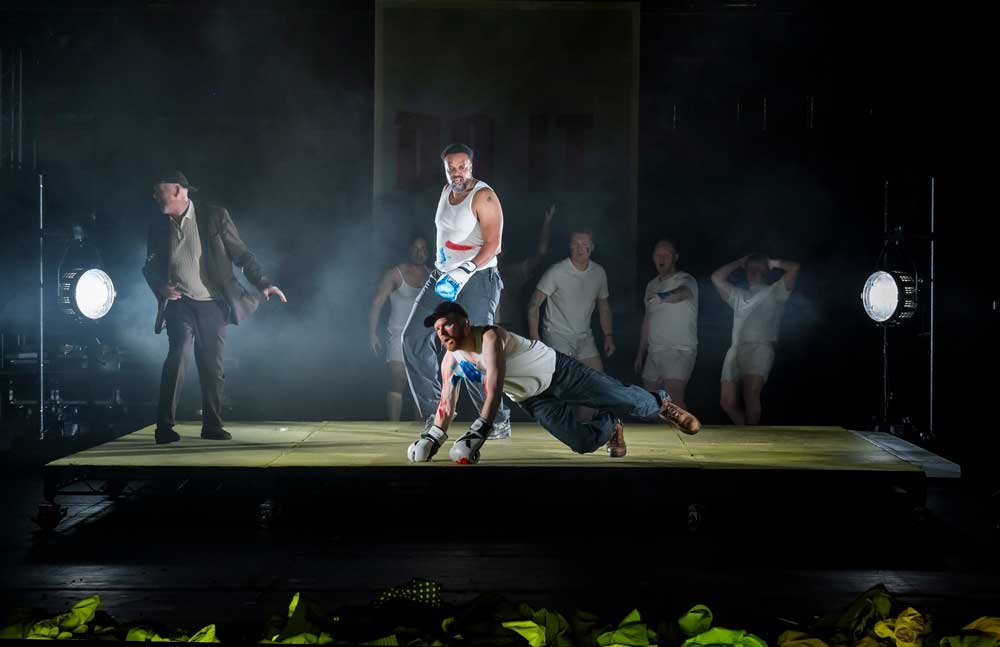
Mahagonny, it seemed to me, also anticipated the invention of the gambling haven of Las Vegas, a city largely founded by the American mobster ‘Bugsy’ Siegel who was a driving force behind the development of the Las Vegas Strip. And so, Mahagonny, is founded by three felons on the run, Leokadja, Trinity Moses and Fatty, the bookkeeper in an undefined area of the US. It is controlled by money-grabbers and whores. The city’s growth depends on its uninhibited enjoyment of drinking, the availability of sex (led by Jenny Smith and her girls), eating and bare- knuckle fighting. Into this maelstrom wander four lumberjacks, led by Jimmy Mcintyre who falls to be seduced by Jenny, and whose friendship was sealed felling trees in Alaska. By the ‘finale ultimo’ Mahagonny has eaten these innocents up and spat them out. Jimmy Macintyre is electrocuted after a mock trial in which he sentenced to death for not paying his bar bill. It is that sort of show.
Weill’s score is gloriously played under the baton of German conductor André de Ridder. Rosie Aldridge as Leokadja, Danielle de Niese as Jenny and especially, Simon O’Neill as Jimmy, perform superbly both in song and speech, and with clarity, and power as they wrap their tonsils around Weill’s mammoth score. To see this production was illuminating. The diversity of Weill’s music amazes. There are chorales, marches, laments, alongside Weill’s recognisable cabaret style, jazz scoring -and who doesn’t know Jenny’s ‘Alabama Song,’ the apotheosis of the show
Well, show me the way
To the next whisky bar
Oh, don’t ask why
…
Oh, moon of Alabama
We now must say goodbye
We’ve lost our good old mama
And must have whisky, oh, you know why
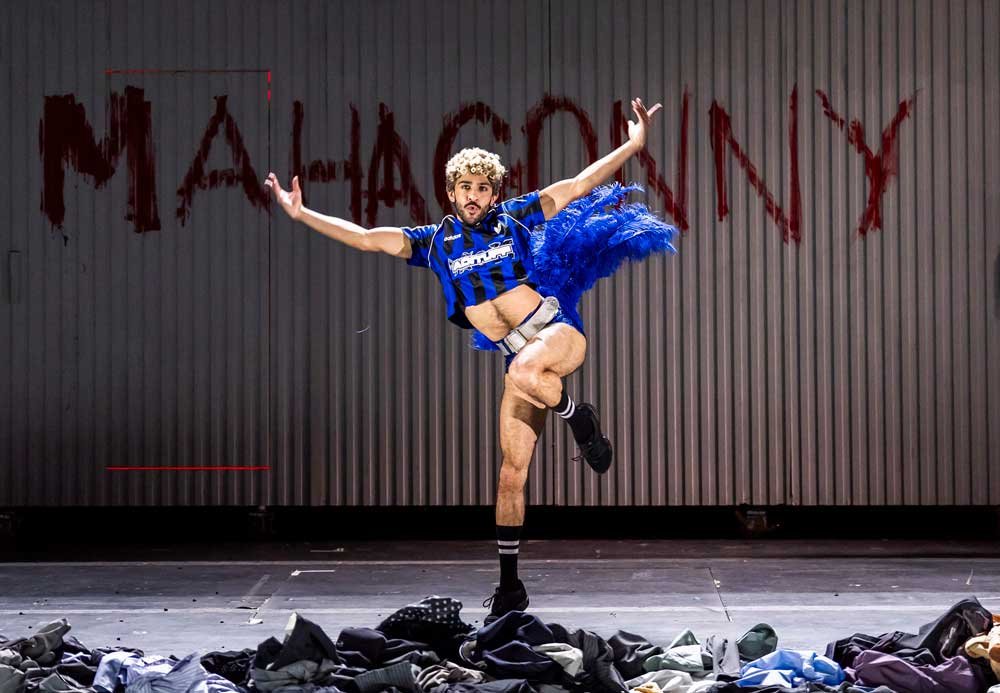
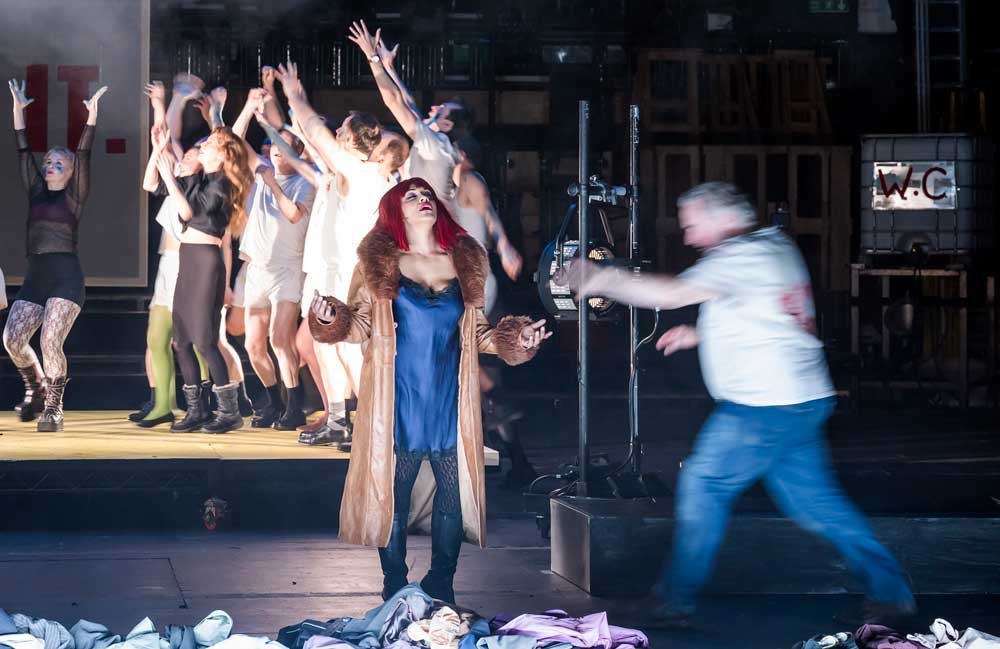
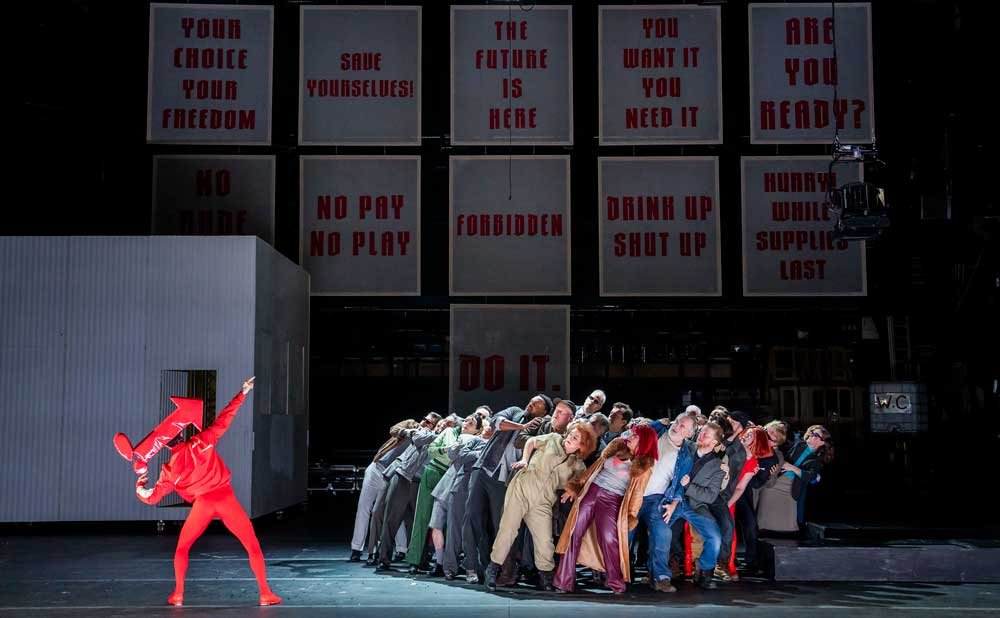
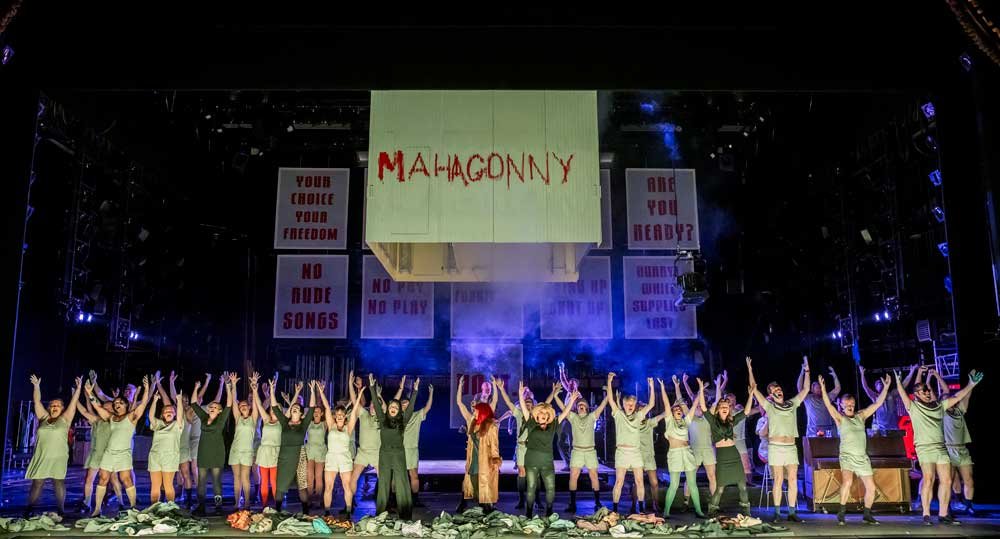
The production itself, under the sure hand of Jamie Manton, is large, expansive, comical, clever and beautifully staged. The large ensemble is moved around the large Coliseum stage confidently, sometimes as a Greek chorus sometimes as an angry crowd in off centre, sometimes agit prop and bizarre, edgy, often bare settings (by Milla Clarke), in lighting designer, D. M. Wood’s half-light and shadows reflecting German expressionist cinema. And it is so witty! As a typhoon is set to strike Mahagonny a red costumed, tap-dancing weather vane threatens the citizenry to choreographer, Lizzi Gee’s dance moves.
The show ends with the ensemble challenging the audience: “The freedom money gives you, is no freedom.” The city of Mahagonny, which is based on the premise “Get kicked in the face if you want, but I’d rather stand and kick” finally falls and destroys itself to rapturous applause from the first night audience. This was a thrilling evening of opera, with almost too much musically and in its production to digest at one sitting, but an evening which will remain with all who saw it. Brilliant.
Rise and Fall of the City of Mahagonny
Composer: Kurt Weill
Librettist: Bertolt Brecht
Director: Jamie Manton
Conductor: André de Ridder
Rise and Fall of the City of Mahagonny opens on Monday 16 February for 3 performances at
the London Coliseum: February 16, 18 and 20 at 19.30.
Performed in English, with surtitles projected above the stage.
Tickets start from £15 (including all fees).