

In 1996, CHOOSE LIFE sounded like a challenge. Thirty years on, the landscape has shifted, but the hunger hasn’t. Addiction hasn’t disappeared – it’s shifted. It’s quieter now, more embedded. Less needle, more screen. Less escape, more repetition. The same restless search for something to fill the space.
The musical highlights the world we see changing around us, the obscene concentration of wealth, economic and political power in the hands of so few people. It addresses the modern culture of powerlessness. Art the singing-and-dancing Trojan horse that delivers direction and relevance.
This isn’t nostalgia, it’s closer than that. The past isn’t revisited – it lingers. The musical doesn’t tidy it. It sits with it. Listens to it. And lets it sing. New songs, classic songs, a musical like never before. Not for the easily confronted. It’s funny, loud, dynamic, and brings a dark dangerous energy never experienced before on the West End stage.
Review and comments by Richard Lambert
I wasn’t invited to review this production, and my request for a press ticket was declined. Curious to see what all the discussion was about, I bought a ticket and attended a performance a few weeks after the official press night.
That also means I saw the show after it had been given time to settle and evolve beyond the performances reviewed by the invited critics. Productions often tighten, performances grow in confidence and technical elements become more assured as a run progresses.
Having seen the show in those circumstances, I am still genuinely surprised by the weight of the negative reviews. While I can understand some of the criticisms—particularly regarding the adaptation’s softer treatment of the source material—I found far more to admire than many of the published reviews suggested and came away having thoroughly enjoyed the evening.
Turning Trainspotting into a musical was always going to divide opinion. Judging by many of the national reviews, it has done exactly that. Most critics questioned whether Irvine Welsh’s iconic novel and Danny Boyle’s groundbreaking film could ever successfully make the transition to musical theatre. While I understand many of their reservations, I came away far more impressed than I expected.
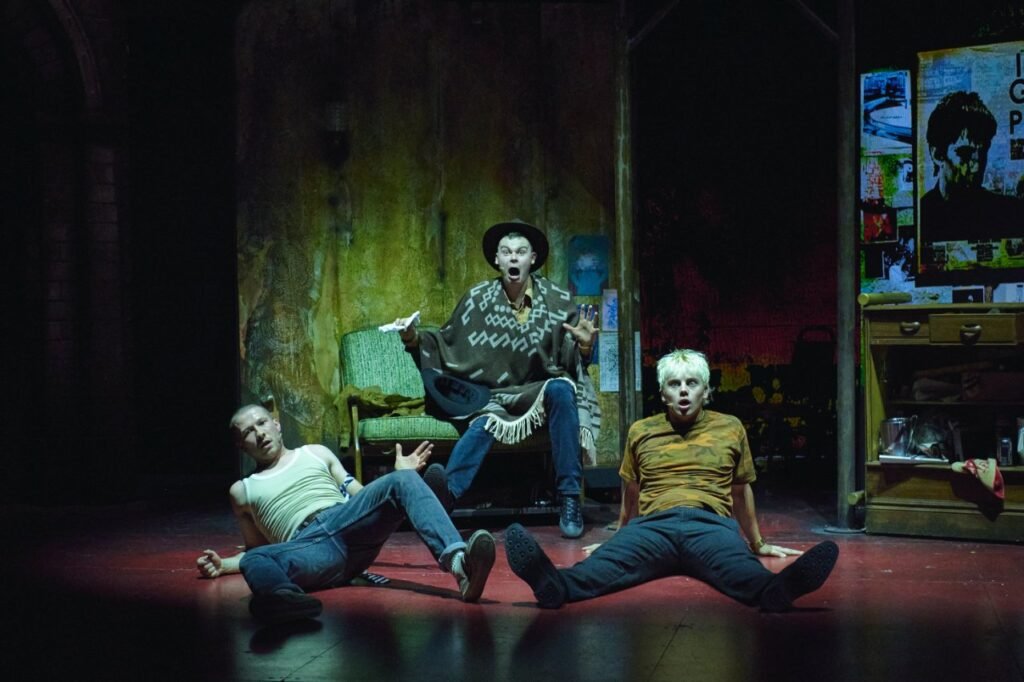
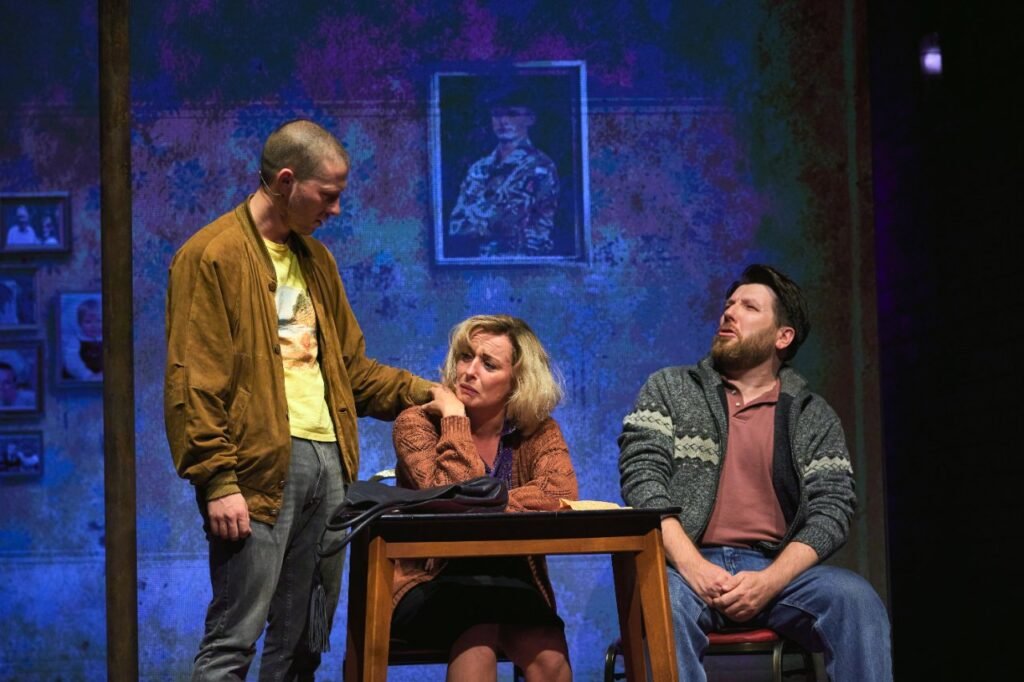
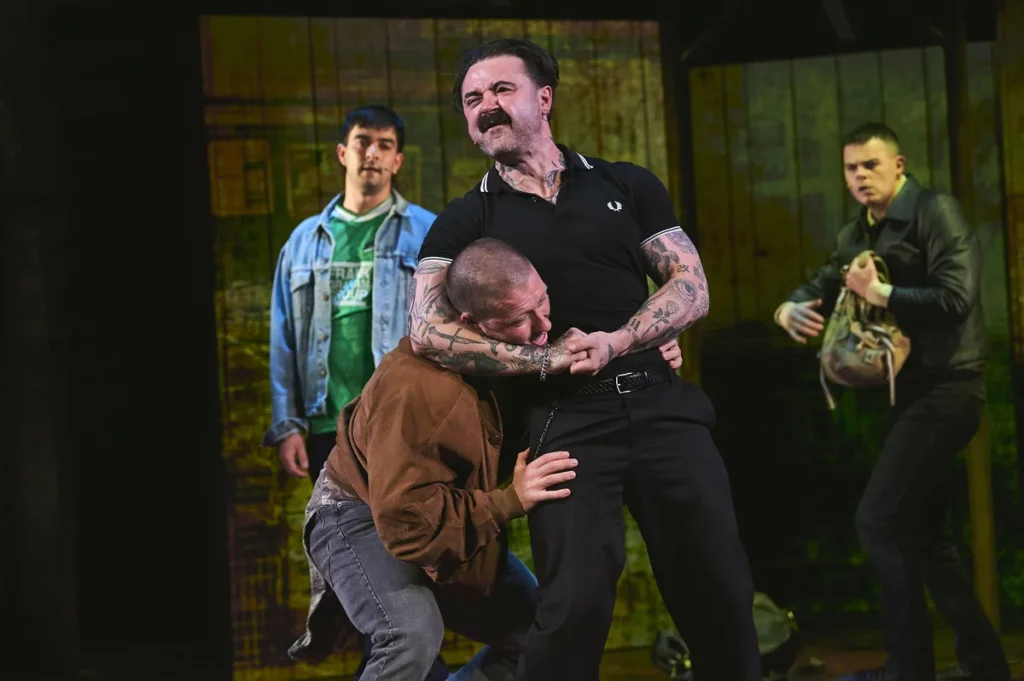
What immediately struck me was how visually inventive the production is. The set works exceptionally well, transforming effortlessly between locations without ever interrupting the pace of the story. It gives the production a cinematic flow that suits the material perfectly.
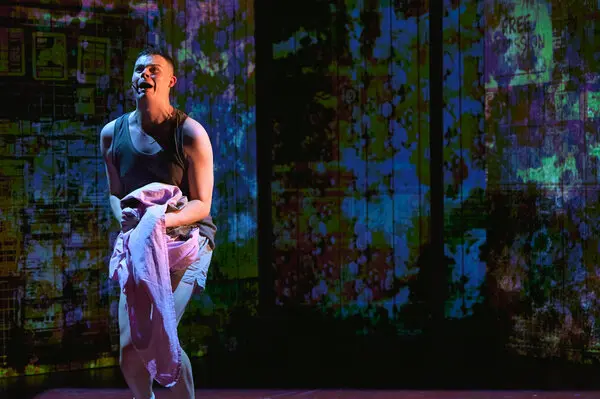
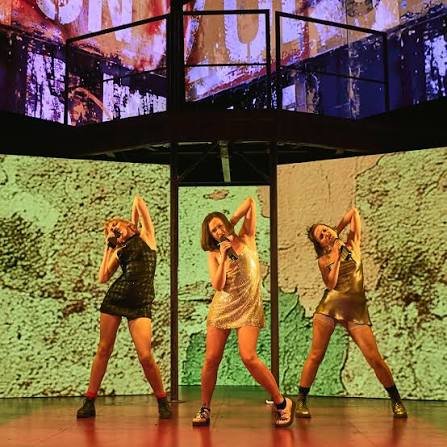
The video design is undoubtedly one of the show’s greatest strengths. Rather than simply acting as a backdrop, it becomes an integral part of the storytelling, creating atmosphere, extending the locations and adding a visual energy that keeps the production constantly moving.
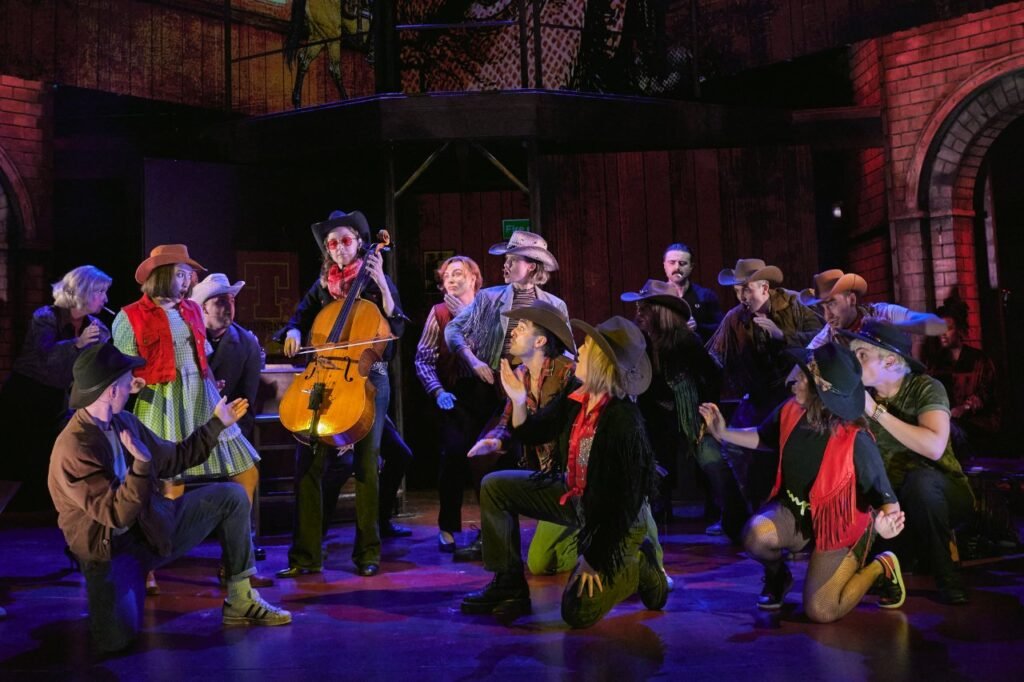
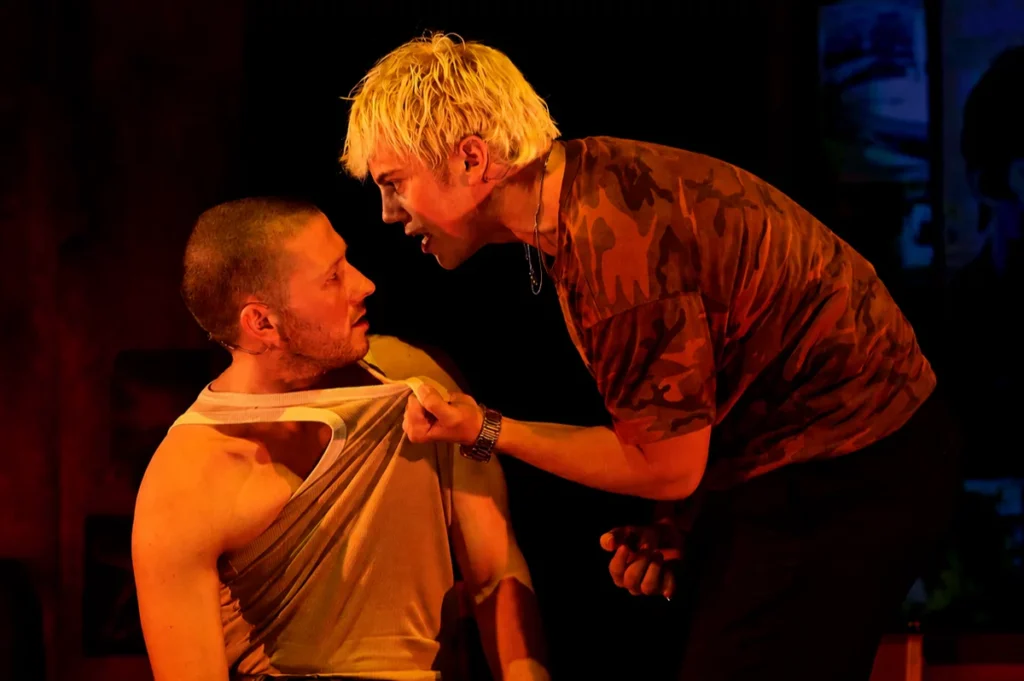
The choreography is equally impressive. It’s fast, inventive and performed with tremendous commitment by the cast. Every musical number has purpose and momentum, helping to drive the story forward while injecting excitement into the evening.
One area where I found myself disagreeing with many reviewers was the score. Several critics dismissed the music as forgettable, but I simply didn’t feel that was the case. A Perfect Day was a particular standout, providing one of the evening’s most memorable and emotionally engaging moments. Bittersweet Symphony also worked well as a song choice in my humble opinion. The songs may not replace the iconic soundtrack associated with the film, but they deserve far more credit than they’ve generally been given.
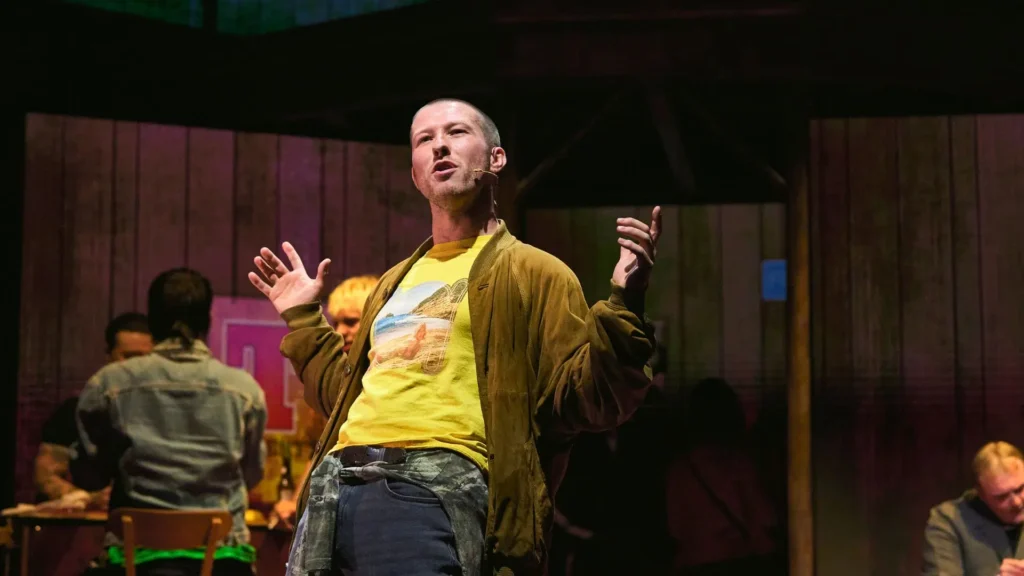
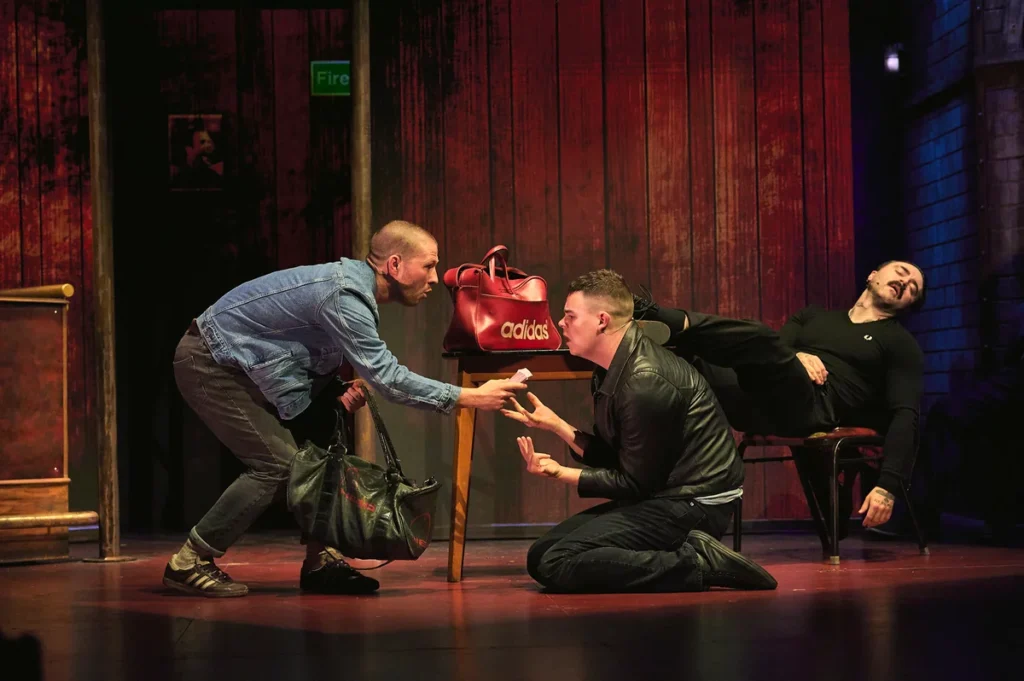
Not everything works quite so well. Lewis Kidd‘s portrayal of Renton is technically accomplished, but it felt a little too understated for my taste. I wanted him to be louder, more volatile and to carry a greater sense of danger, swagger and unpredictability. Instead, this Renton often came across as almost effortlessly cool—a little too laid-back, almost Fonz-like—rather than the loud, streetwise firebrand that dominates the novel, film and original stage play. It felt like a deliberate directorial choice, but one that didn’t entirely work for me. And Franco’s accent was so thick that I had to rely on swagger and tone over diction to understand what was being said.
One area that didn’t quite hit the mark for me was the sound. The band itself sounded excellent, with plenty of energy and clarity, but the overall sound system never seemed to make full use of the auditorium. Sitting in the Grand Circle, the majority of the sound appeared to be coming directly from the stage loudspeakers, with only a handful of small rear speakers contributing to the mix. The underhung speakers that should have been covering our seating area seemed either absent from the mix or operating at such a low level that they made little difference. As a result, the sound lacked the immersion and even coverage you would expect in a theatre of this size.
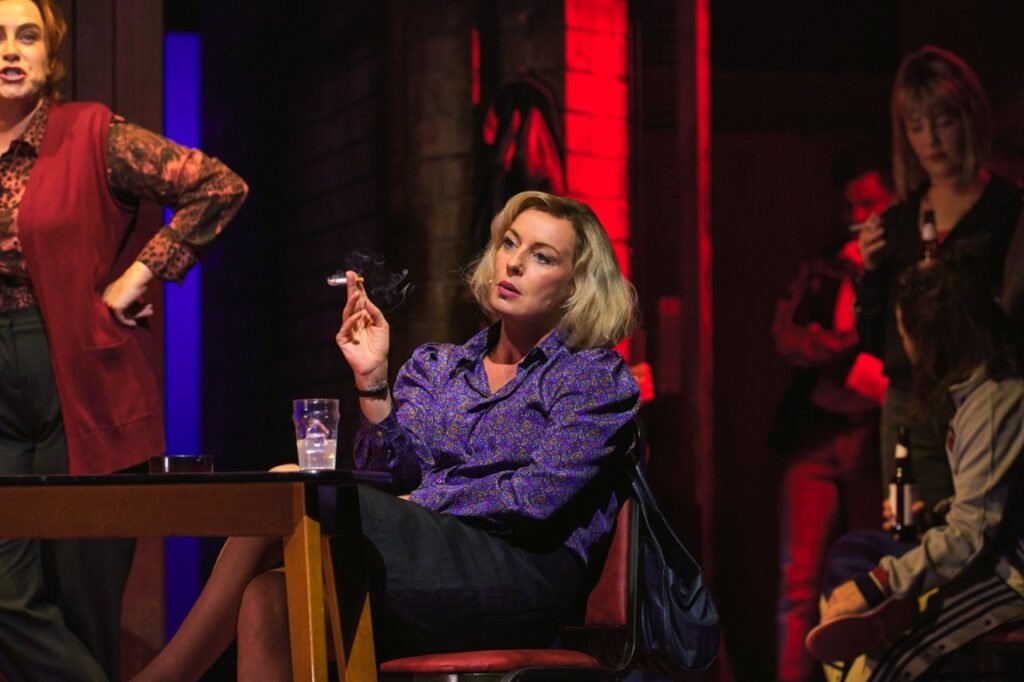
Ian Scott‘s lighting design also left me slightly conflicted. There are some beautifully crafted moments, but at times the lighting felt surprisingly restrictive, closing down the stage space rather than allowing the production to fill the stage and breathe.
The novel, film and stage play all confronted audiences with the ugly reality of heroin addiction. They never allowed you to look away from the physical degradation, emotional despair and sheer horror of withdrawal. Here, much of that rawness has been diluted. The withdrawal scenes, in particular, never felt entirely convincing. Renton appears to go cold turkey while remaining dressed in jeans, a T-shirt and socks, writhing around on a bed before quickly moving on. Anyone familiar with addiction knows the reality is considerably more harrowing. The pain, vulnerability and complete physical collapse that define those moments are largely absent.
Similarly, it isn’t simply the lack of the gritty male nudity seen in previous incarnations that changes the tone. (Ewan McGregor made it his trademark in several films to get nekid, bless him). Trainspotting is supposed to be uncomfortable. It should make the audience squirm. Here, the edges have been rounded off just enough that some of the story’s emotional impact is lost. Perhaps the production’s biggest problem is that it never quite decides who it’s for. Fans of the novel, film and original play may miss the raw grit, uncompromising language and visceral portrayal of addiction, while traditional musical theatre audiences may find the subject matter too bleak despite the addition of ballads and new songs. In trying to appeal to both audiences, it risks never fully satisfying either, leaving the production without a clearly defined identity.
Many reviewers concluded that Trainspotting simply shouldn’t have become a musical. I don’t agree.
Does it reach the heights of the novel or Danny Boyle‘s extraordinary film? No. Those versions remain untouchable. But judged on its own merits, this is an imaginative, energetic and visually accomplished production with superb choreography, excellent video design and a score that deserves more appreciation than it has received.
It may divide audiences just as it has divided the critics, but for me there was far more to admire than to dismiss.
Photo credit: Matt Crockett
Cast
- Lewis Kidd – Renton
- Sheridan Townsley – Sick Boy
- Kieran Andrew – Spud
- Frankie O’Connor – Franco Begbie
- Finlay Paul – Tommy
- Rebecca McKinnis – Cathy Renton
- Gordon Cooper – Davie Renton
- Ashley J. Russell – Colleen
- Rosie Dignan – Alison
- Yana Harris – Kelly
- Sophie Hutchinson – Lizzie
- Ally Kennard – Swanney / Multiple Roles
- Kieran Brown – Twiggy / Multiple Roles / Resident Director
- Melanie Marshall – The Call of Heroin
- Samuel Stewart – Ensemble
- Finlay McKillop – Ensemble
- Ciara Ennis – Ensemble
- Victoria Nicol – Ensemble
- Kyra Fyvie – Ensemble
- Chris O’Mara – Ensemble
Creative Team
- Book: Irvine Welsh
- Music & Lyrics: Stephen McGuinness & Irvine Welsh
- Director & Development: Caroline Jay Ranger
- Associate Director: Denise Ranger
- Set & Costume Design: Colin Richmond
- Lighting Design: Ian Scott
- Sound Design: Rory Madden (for Sonalyst)
- Video Design: Douglas O’Connell
- Choreography & Additional Movement: Christina Andrea
- Musical Supervisor, Orchestrator & Music Director: Stuart Morley
- Casting Director: Anne Vosser
Title: Trainspotting: The Musical
Venue: Theatre Royal Haymarket
Address: 18 Suffolk Street, London SW1Y 4HT
Dates: 15 July – 5 September 2026
Press Night: 22 July 2026
Running Time: 2 hours 30 minutes (including one interval)
Performance Times: Monday–Saturday 7.30pm; Thursday & Saturday matinees 2.30pm
Age Guidance: 15+
Content Warning: Contains scenes and depictions of drug taking and death, strong language and adult themes.
Book: Irvine Welsh
Music & Lyrics: Stephen McGuinness & Irvine Welsh
Director: Caroline Jay Ranger