
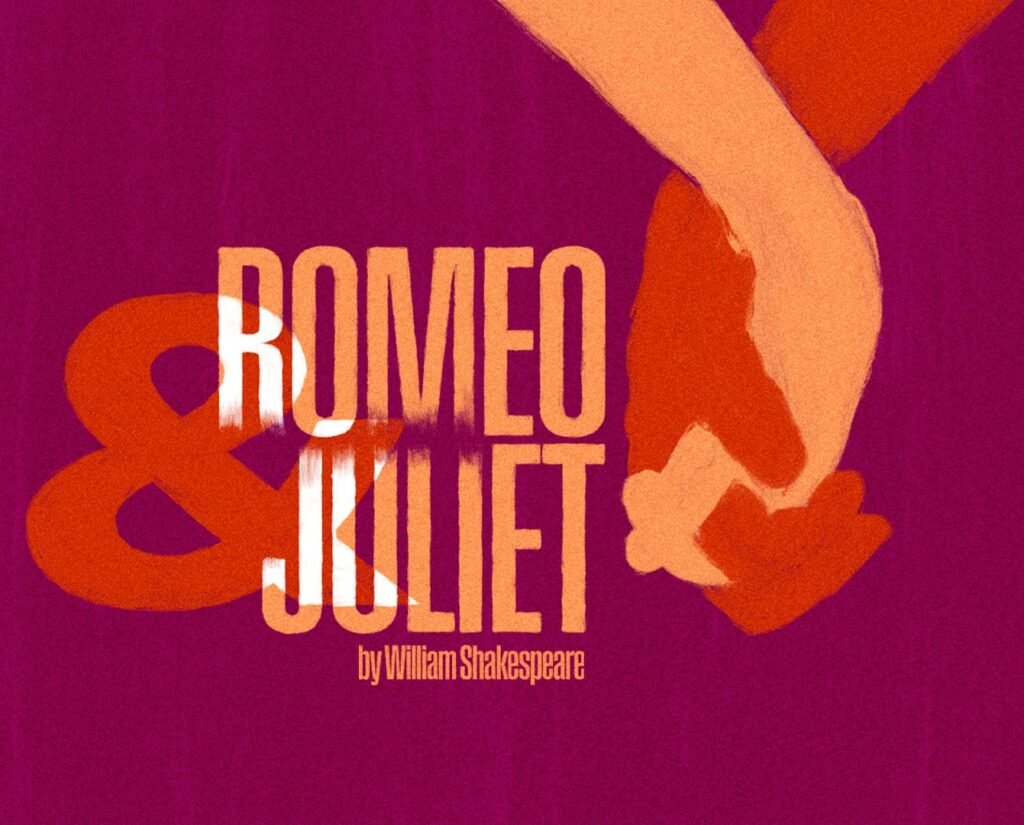
James Haddrell, Artistic Director of Greenwich Theatre, comments, “We are thrilled to be presenting this bold new version of Romeo & Juliet – though our decision to reimagine Romeo as a female character is far from radical. While the play certainly presents a Verona built on very strong gender roles, where the men are the rulers, the landowners, the warriors and the family leaders, the love story at the centre of the play is about two young people who fall desperately in love against a backdrop of violence, where lives can be all too easily cut short and the destinies of teenagers too often sit outside their control. That’s not a story about gender or sexuality – and nor should it be. It’s a universal story about parents who have lost touch with their children, and the extremes of emotion we can feel when we’re young.”
Review by Stephen Gilchrist
About a quarter of a century ago, when I was reviewing for WhatsonStage.com I reviewed Emily Blunt as Juliet at the Chichester Festival Theatre. I had not seen her before and wasn’t even aware she was the daughter of a professional colleague of mine. I wrote of her
“And what a star Chichester has found in Emily Blunt‘s Juliet! This girl is going places. Her performance here belies her age… Blunt turns her hand from heart-wrenching tragedy to flighty and flirtatious adolescence to unbridled vamp. She also has a natural talent for physical expression and… she is superb even when mute” My colleague told me years later that Emily carried the review around with her!
I’m not name dropping. It is just that I would have loved to say something similar about this new production for six actors at the Greenwich Theatre. I really wish I could have done so. Unfortunately, and despite an interesting take on Will Shakespeare’s love story, there are just too many issues which are problematic. This is not to say I did not enjoy the show, despite its almost three-hour running time.
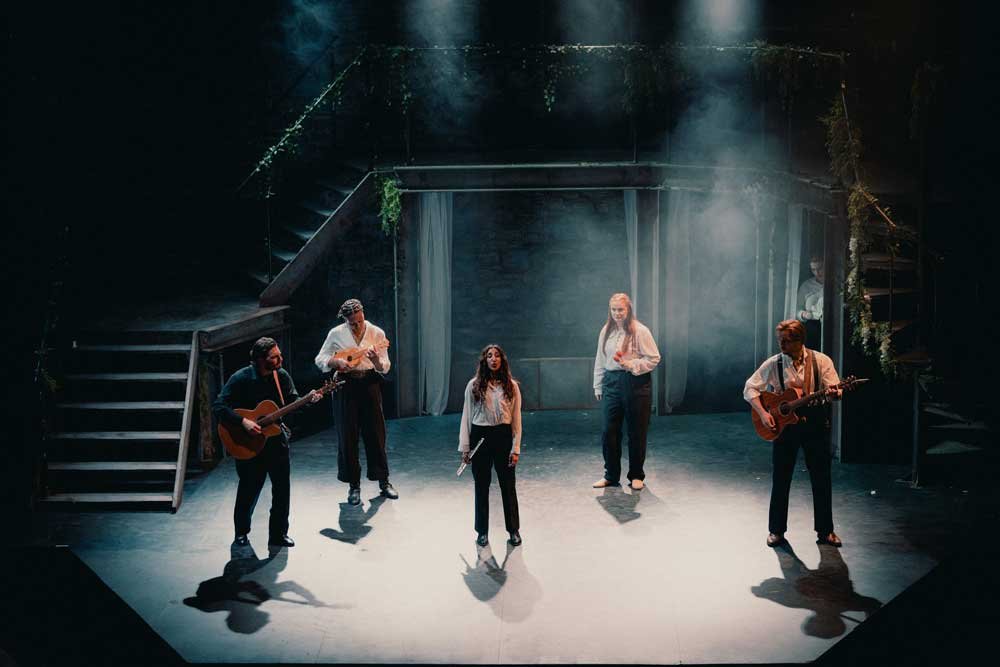
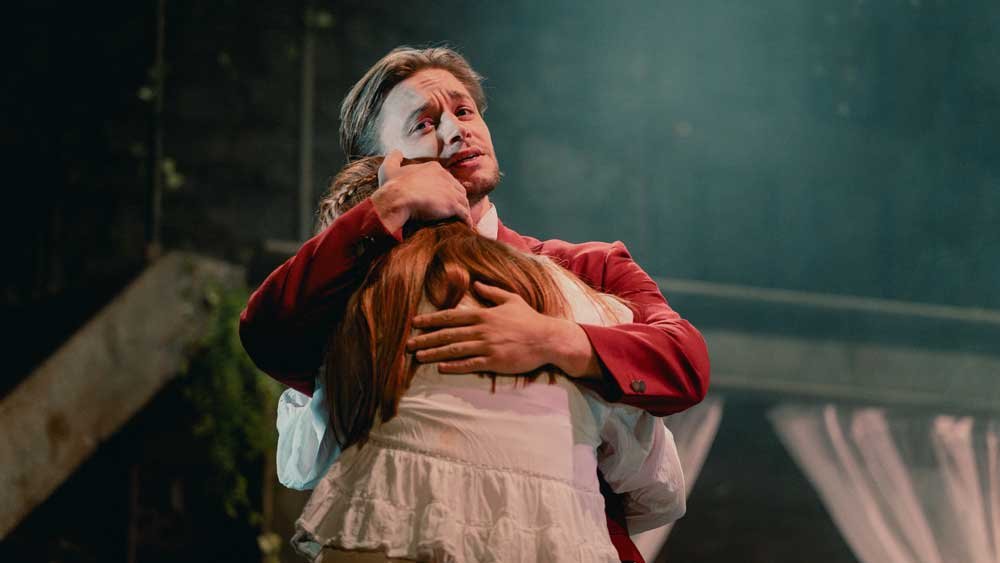
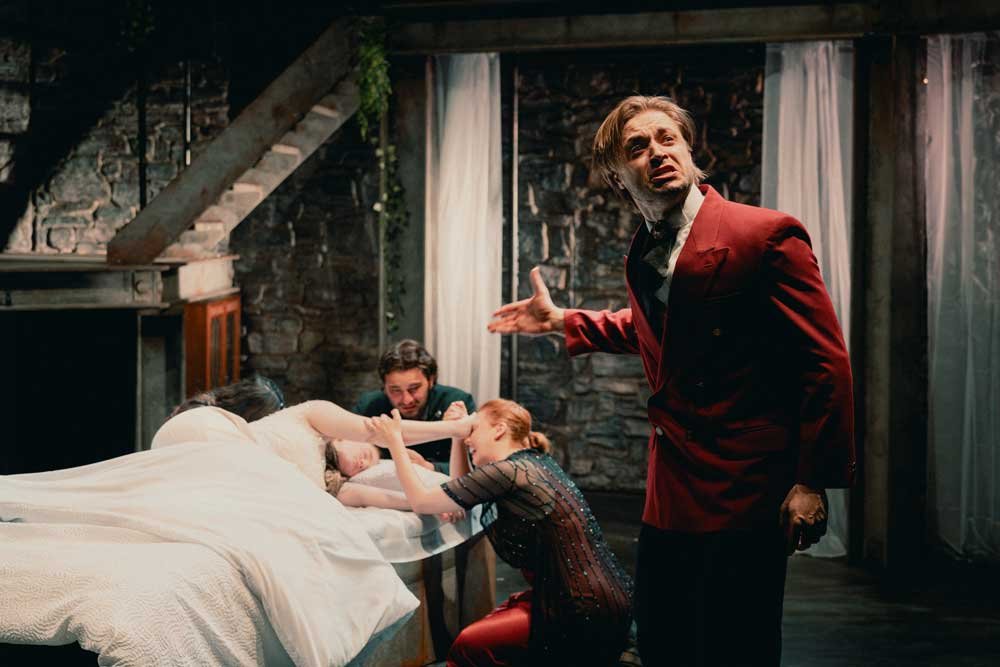
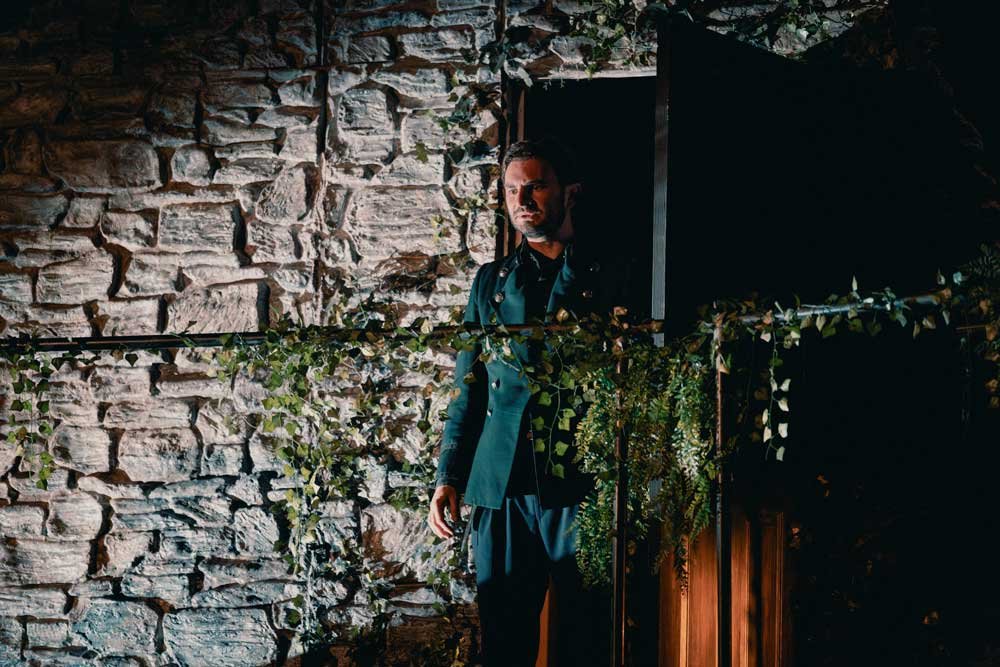
Publicised as a ‘Queer musical adaptation,’ the production is not as revolutionary as it may sound. The direction and staging are solidly traditional and the periodic interludes of folk-style music, well sung and played by members of the company, provide a pleasing commentary on the characters’ emotions. The set design by Jana Lakatos provides an elegant backdrop to the action. And I don’t complain about the gender reversal of Romeo, in fact after a while you forget about the queer gender skewing. The girl-on-girl romance provides an added rationale to Lord Capulet’s forbidding Romeo’s wooing of his daughter, preferring the wealthy nobleman, Paris.
Here are the problems. In the play as written there are roughly twenty-seven named characters with speaking parts. Even in this version there are twelve characters. The problem is that they are played by six actors, which is to say four women and two men, and so there is plenty of doubling and even tripling which potentially can lead to some confusion to those unfamiliar with the play.
Romeo and Juliet, of course, follows the passionate, short-lived romance of two “star-crossed lovers” whose deaths ultimately reconcile their feuding families, the Montagues and the Capulets In this showing actors play characters on both sides of Verona’s tribal divide, for example Romeo’s father, Lord Montague, Tybalt (Juliet’s hot-headed first cousin) & Paris (the primary suitor for Julie as approved by Lord Capulet) are all played by the same actor – James Aldred – rather well as it happens, but occasionally confusing. The director, James Haddrell, tries, not always successfully to differentiate the characters by multiple costume swaps.
The second issue I had was the vocal pitch of the text. I will come to the reading of it shortly, but where the male and female characters converse in conventional productions, the vocal pitch provides a variance in the tone and lilt, or the characteristic rise and fall in the actors’ voices. In this production the pitch of the female actors’ voices in their interchanges with each other does not permit for an undulation in speech.
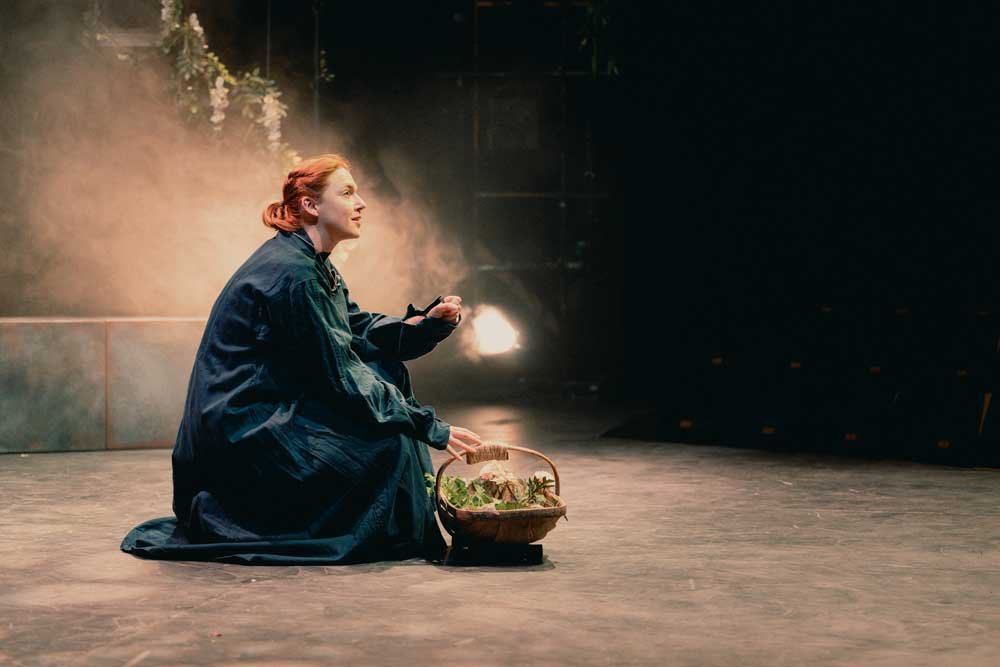
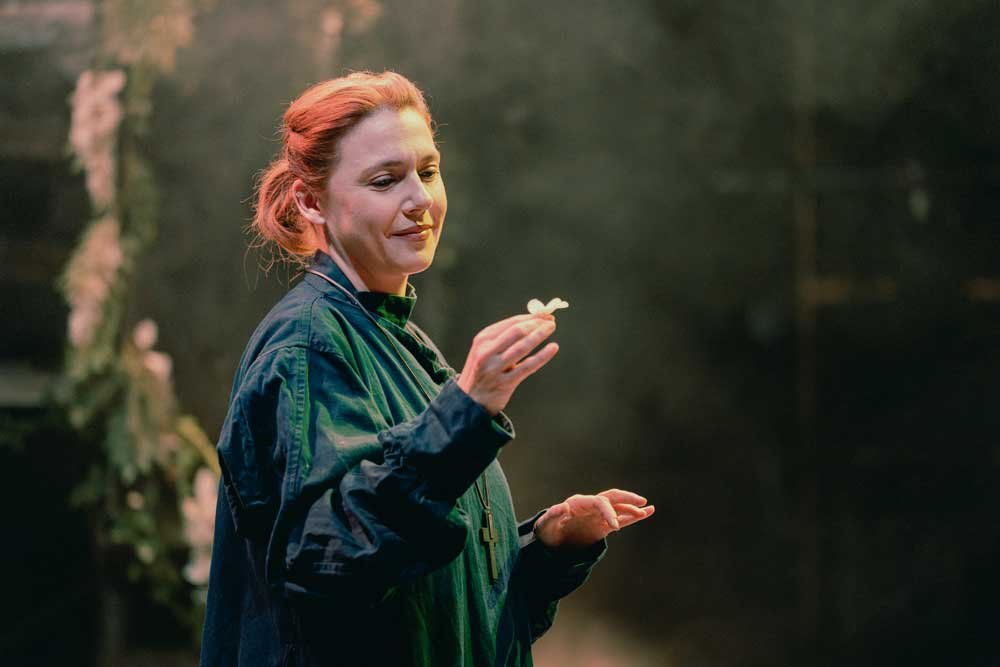
Finally, I was unconvinced by Ava Honey’s Juliet, in her professional debut. I am sure she will mature. This is not to say that she gave a bad performance. She did not, but I would have appreciated a greater depth in her Interpretation. Blossom Timothy’s Romeo did better, though I thought both were outshone by Aldred, Matt Penson as Benvolio, Lord Capulet (and who lifts the show with his big scene after the interval) and Apothecary, and Charlotte Harwood as Lady Capulet and Friar Lawrence. Nikita Johal bounced around enthusiastically, Tigger-like, as Mercutio and Nurse, though in the former, greater clarity of speech would have been appreciated.
This was a brave production where eagerness to please in the presentation of the text replace, to a large extent, the Bard’s poetry. The sword and knife fights were well handled, but the play could have done with some further abridgement and I would have liked more music (MD James Aldred).
This is a work in progress; it has merit but has yet to reach the bold reimagining it tries to be.
Photo credit: Ross Kernahan
Cast
- Blossom Timothy – Romeo
- Ava Honey – Juliet
- Charlotte Harwood – Lady Capulet / Friar Laurence
- Nikita Johal – Mercutio / Nurse
- Matt Penson – Benvolio / Lord Capulet / Apothecary
- James Aldred – Lord Montague / Tybalt / Paris
Creative Team
- Director – James Haddrell
- Musical Director – James Aldred
- Set & Costume Designer – Jana Lakatos
- Lighting Designer – Henry Slater